
If you have ever finished a quilt top and then stared at it wondering how on earth you were going to get all three layers quilted together without a machine the size of your living room, you are not alone. That question is exactly what brings most home quilters to a longarm service for the first time. And the follow-up question I hear almost every time is some version of: "So what does the computer actually do?"
It is a fair thing to ask. The term "computerized longarm quilting" sounds technical in a way that can feel a little intimidating. In practice, though, the concept is pretty straightforward once you see it explained plainly. That is what I want to do here.
What a Longarm Machine Is
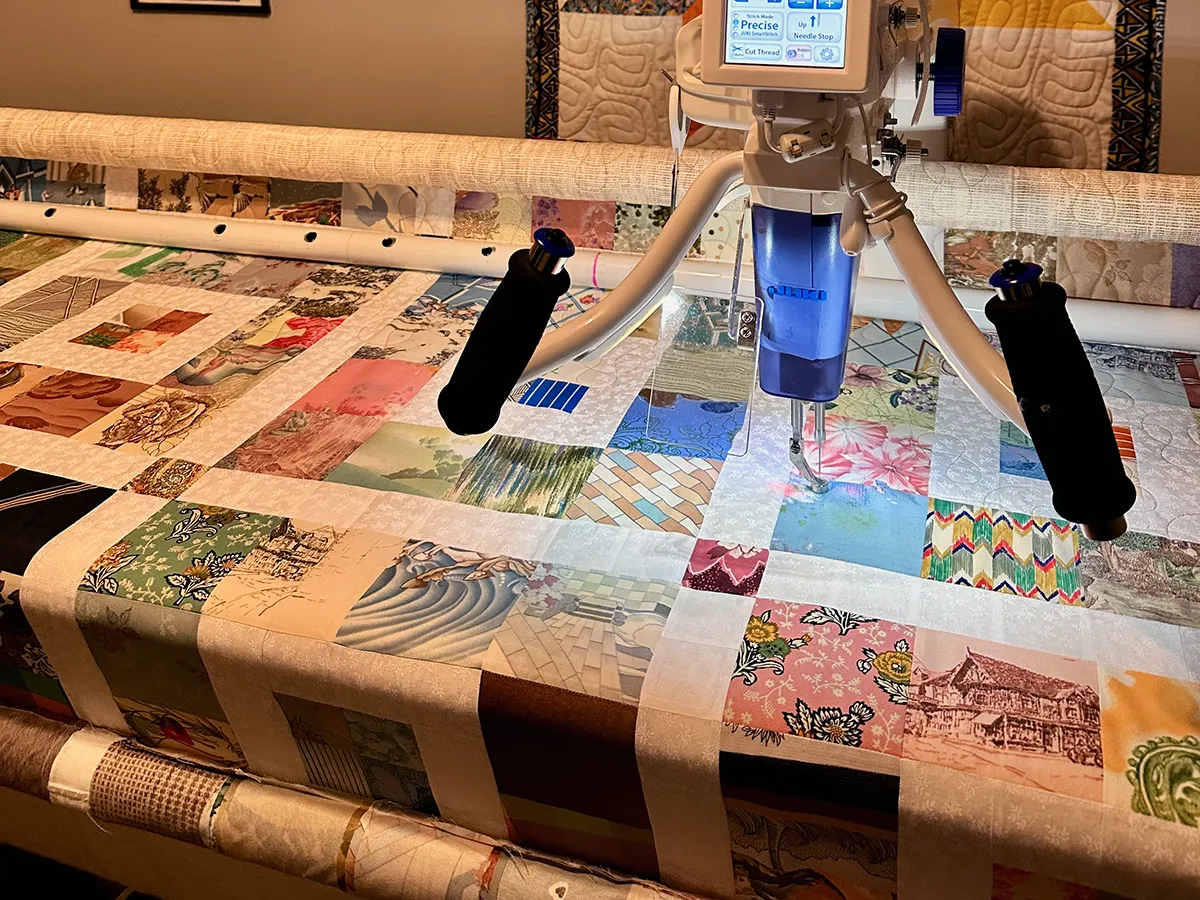
A longarm quilting machine is a large sewing machine mounted on a steel frame that can be anywhere from ten to fourteen feet long. Your quilt top, batting, and backing are loaded onto rollers at either end of the frame and kept under consistent, even tension across the whole width of the quilt. The machine head moves freely across that frame on a track, stitching from side to side and top to bottom.
The key difference between a longarm and a regular domestic sewing machine is that with a domestic machine, you move the fabric under a stationary needle. With a longarm, the fabric stays still and the machine moves. That switch makes it possible to quilt a king-size top without wrestling hundreds of square inches of fabric through a small throat space.
Where the Computer Comes In
A computerized longarm adds a motion-control system to the machine head. Instead of the quilter guiding the machine by hand across the frame, the computer drives the machine head along programmed paths, stitching out a chosen design automatically and repeatably.
The designs themselves are digital files, similar in concept to embroidery files if you have ever worked with an embroidery machine. Each file contains thousands of tiny coordinate points that tell the machine exactly where to move and when to put the needle down. When the computer runs that file, the machine traces every one of those points across the quilt surface, stitching the pattern precisely and consistently from one edge to the other.
What that means in practice is that a pantograph pattern, the edge-to-edge design that covers a whole quilt in a repeating motif, comes out with perfectly even spacing and consistent stitch density whether you are on the first row or the last. No hand fatigue, no drift, no variation in tension from one section to the next.

Edge-to-Edge vs. Custom Quilting
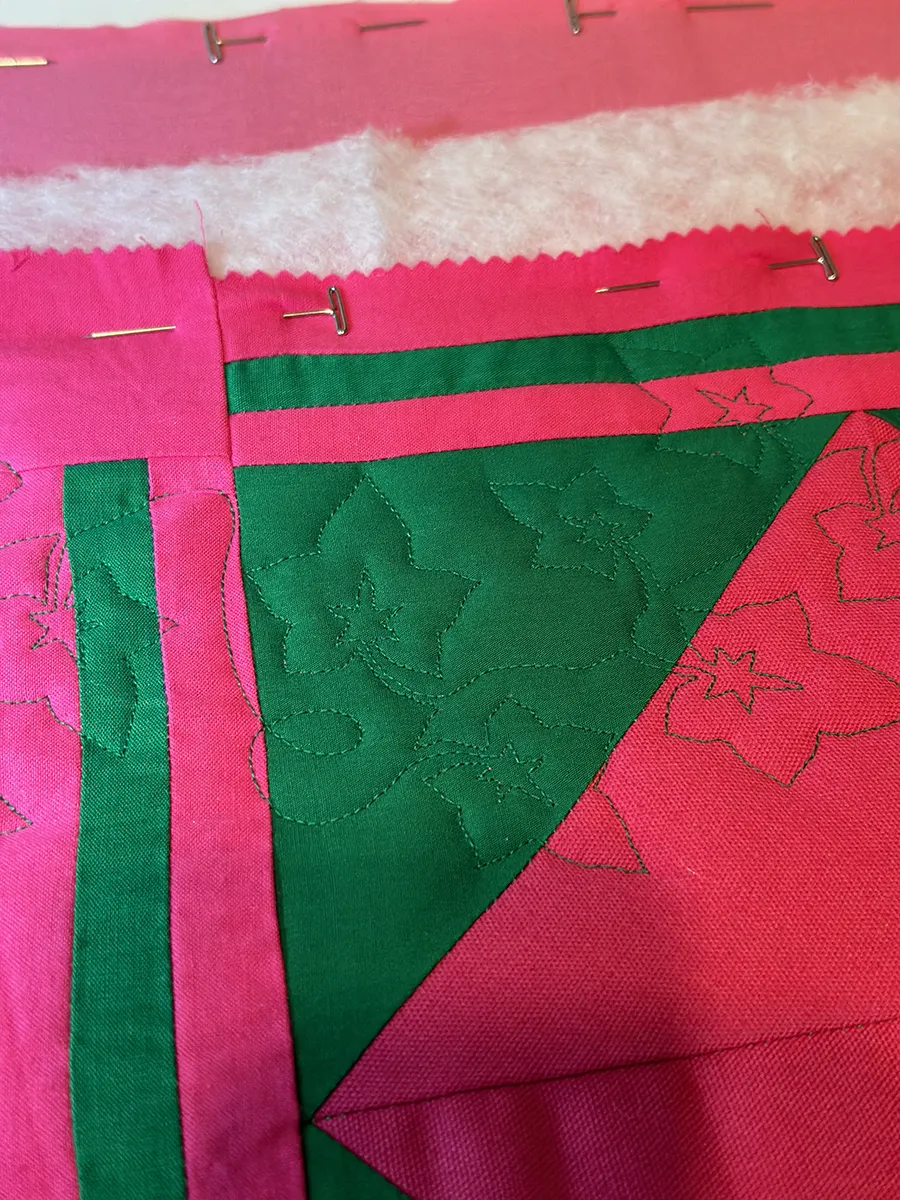
Most home quilters who send their tops to a longarm service start with edge-to-edge quilting, sometimes called an E2E or an allover design. The computer runs the same repeating pattern across the entire quilt from one edge to the other. It is efficient, it looks beautiful, and it is the most affordable longarm option because the setup time is predictable.
Custom quilting is a different thing entirely. With custom work, the quilter programs or guides the machine to stitch different designs in different areas of the quilt, feathers in the borders, stippling in the background, custom motifs centered in large blocks. It takes significantly more time and skill to plan and execute, which is reflected in the price. But for a special quilt where the quilting itself is part of the design, custom work can be extraordinary.
For most memory quilts and t-shirt quilts, an edge-to-edge design is exactly right. The focus of those quilts is the fabrics and the memories they hold, and a well-chosen allover pattern frames that without competing with it.
What You Need to Send to a Longarm Quilter
If you are thinking about sending a top out, here is what a longarm quilter typically needs from you. Your quilt top should be fully pieced and pressed, with seams as flat as you can get them. Any loose threads trimmed. Your backing should be cut at least four inches larger than the top on all sides, so there is enough to load onto the frame. Batting should be the same, or you can ask your longarm quilter to source batting for you.
The most common mistake I see from first-time customers is a backing that is too small. Four inches of overage on each side sounds like a lot until you see how the frame works. That margin is what lets the machine quilt all the way to the edges of your top without running out of fabric on the backing.
Why Home Quilters Choose to Send Their Tops Out
The honest answer for most people is time and equipment. A domestic machine can absolutely finish a quilt, but maneuvering a large top through a small throat space is slow, physical work, and getting consistent tension across a big quilt is genuinely difficult. A lot of home quilters put enormous hours into their piecing and then feel like the finishing step lets the quilt down.
Sending the top to a longarm service means you get a professionally finished quilt without needing to own or operate a machine that costs anywhere from ten to thirty thousand dollars. You get your top back bound-ready, flat, and quilted evenly, and you can put your own time into the next project.
I work with home quilters here in Atlanta and around Georgia regularly. Some folks drop off locally, and some ship their tops to me. Either way, the first conversation is always free, and I am happy to talk through design options, batting choices, and turnaround time before you commit to anything.
Ready to finish that quilt top?
Let's talk through your design options and get your quilt on the frame. Atlanta drop-off and shipping both welcome.
More from the Blog
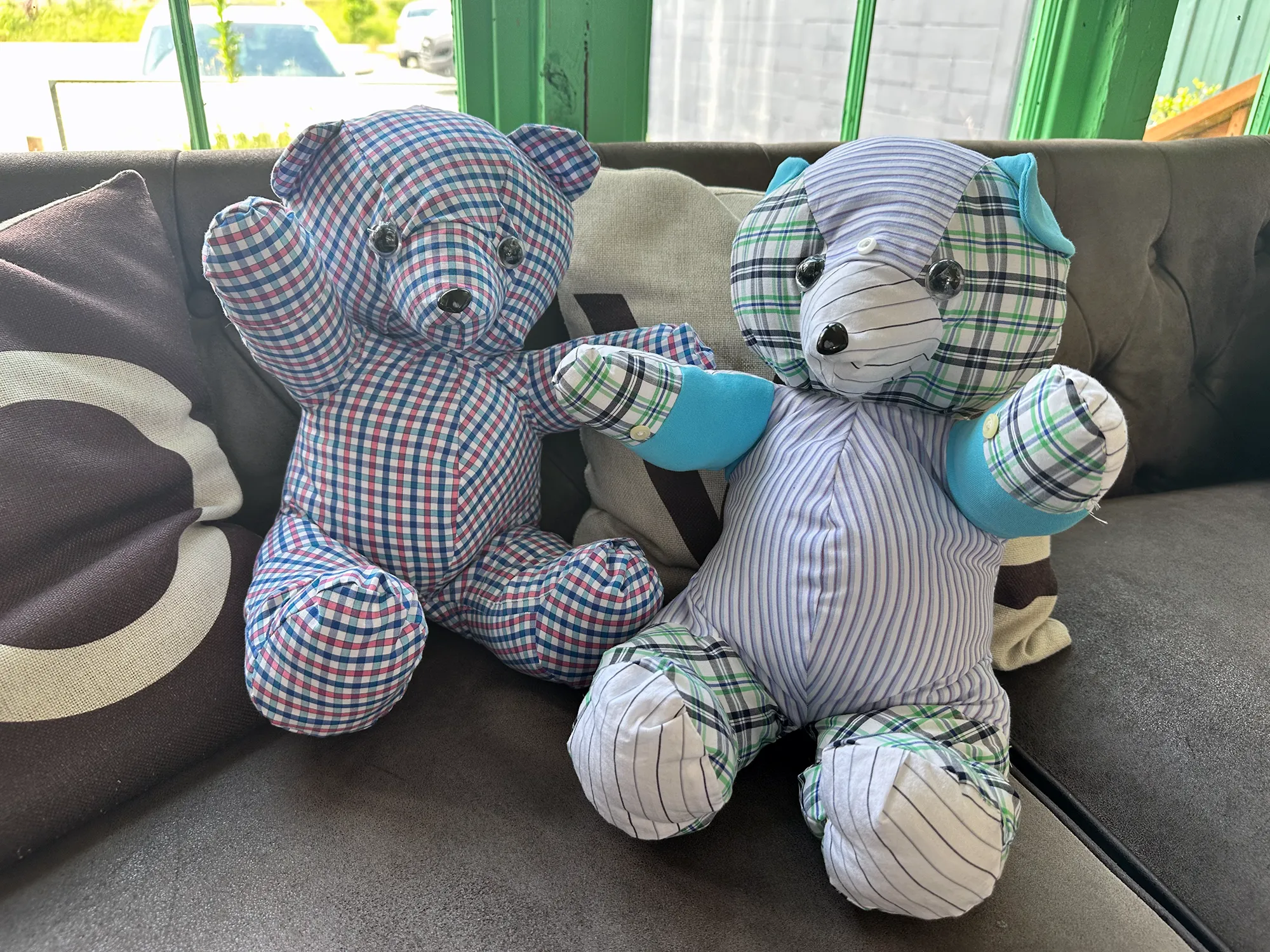
Memory Bears Made from Clothing
A memory bear made from meaningful clothing is something you can hold, display, and pass down. Learn how the process works, what clothing is accepted, and how to get started.
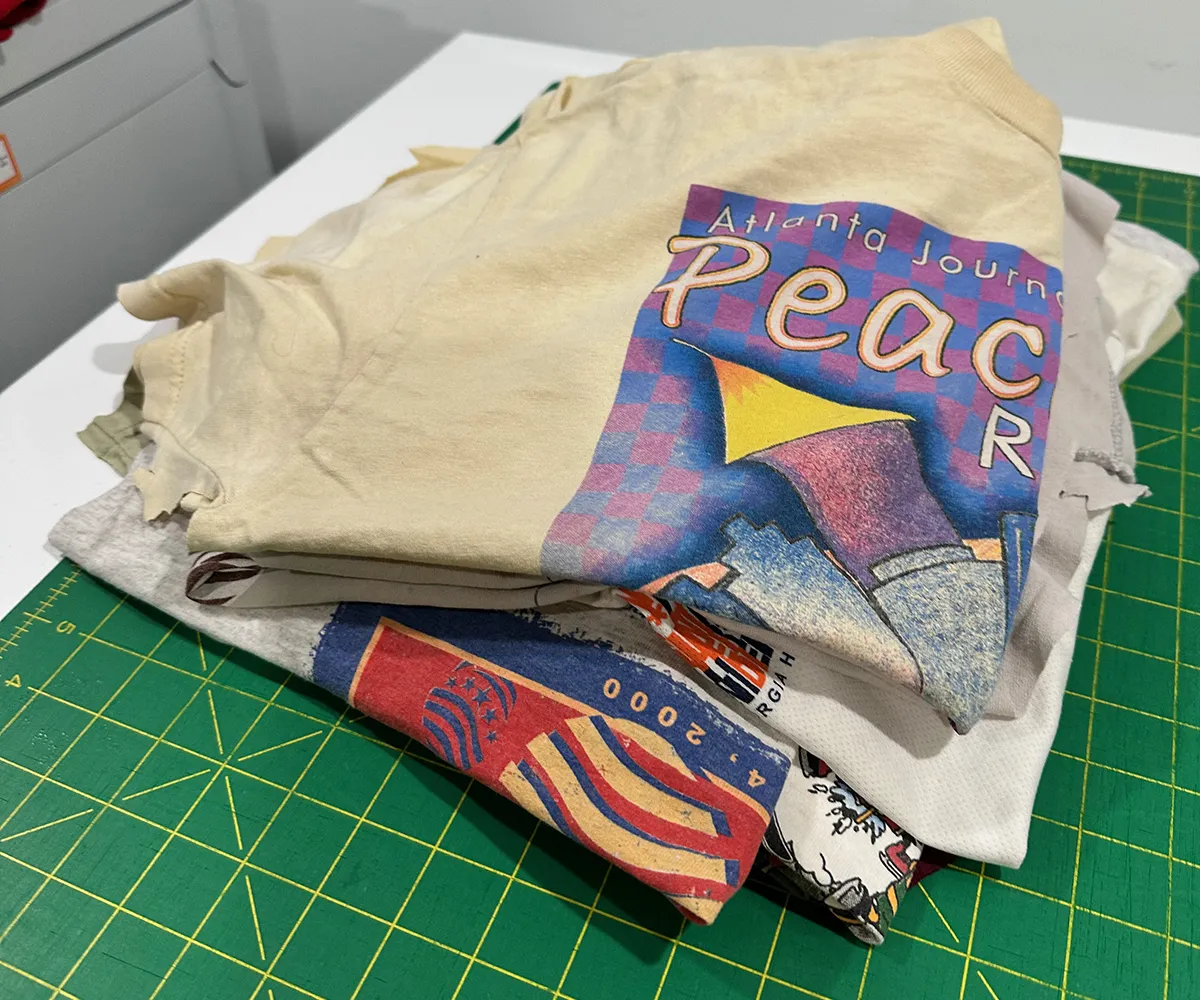
The Color and Design Principles Behind Every T-Shirt Quilt Layout
Before Wesley sews a single seam, every t-shirt quilt goes through a deliberate design process, color distribution, visual weight, neighbor contrast, and more. Here's exactly how it works.
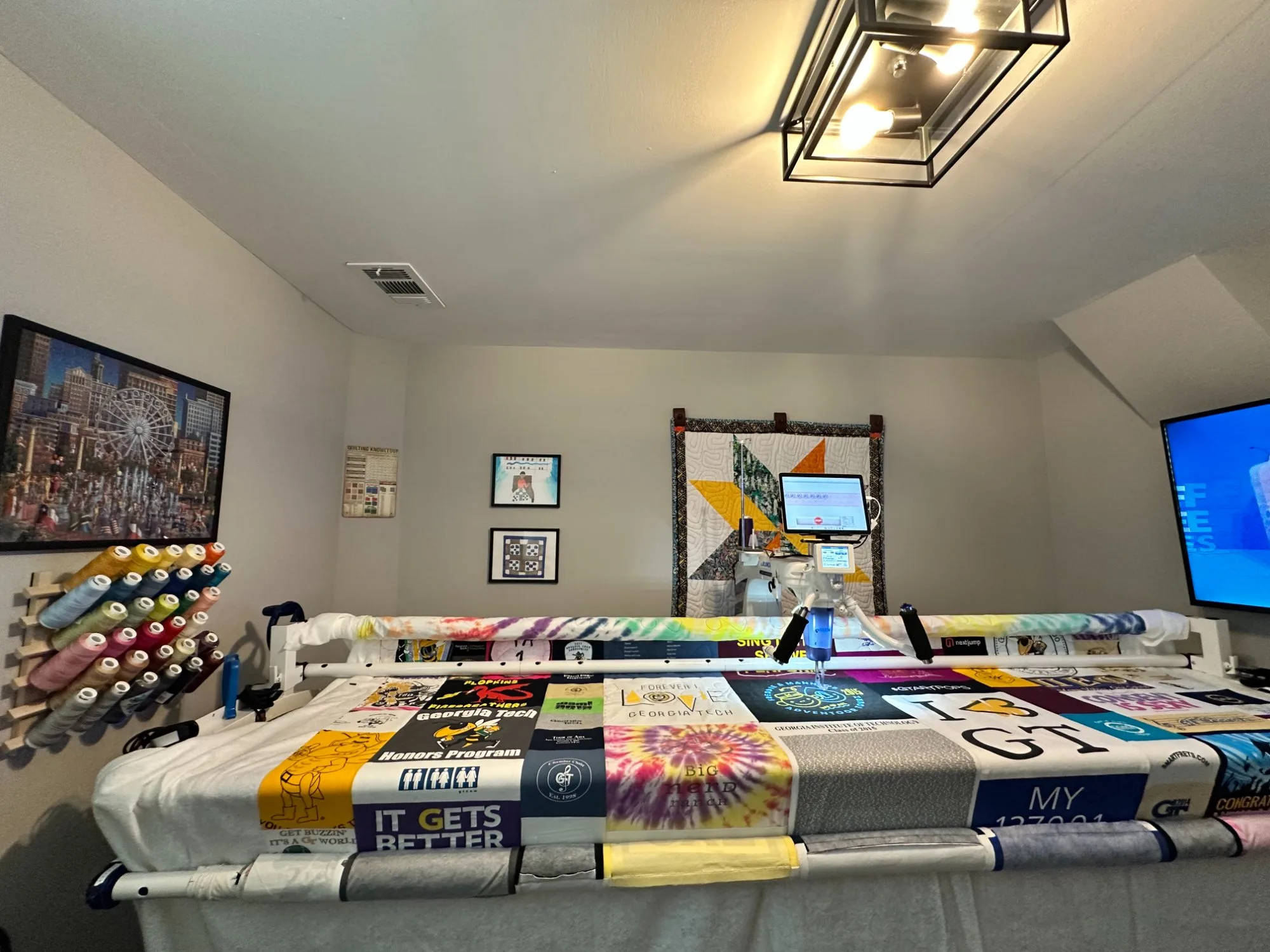
A Look at Long Arm Quilting Services
How Quilts by Big Wes uses computerized long arm quilting in Atlanta to add custom stitching that brings your quilt to life, from t-shirt quilts to memory quilts.
Let's Get Your Quilt Top Finished
You put the work into piecing it, and it deserves a great finish. I work with home quilters all over the Atlanta area and accept shipped tops from across Georgia. Schedule a free consultation and we will find the right design, batting, and turnaround for your project.