
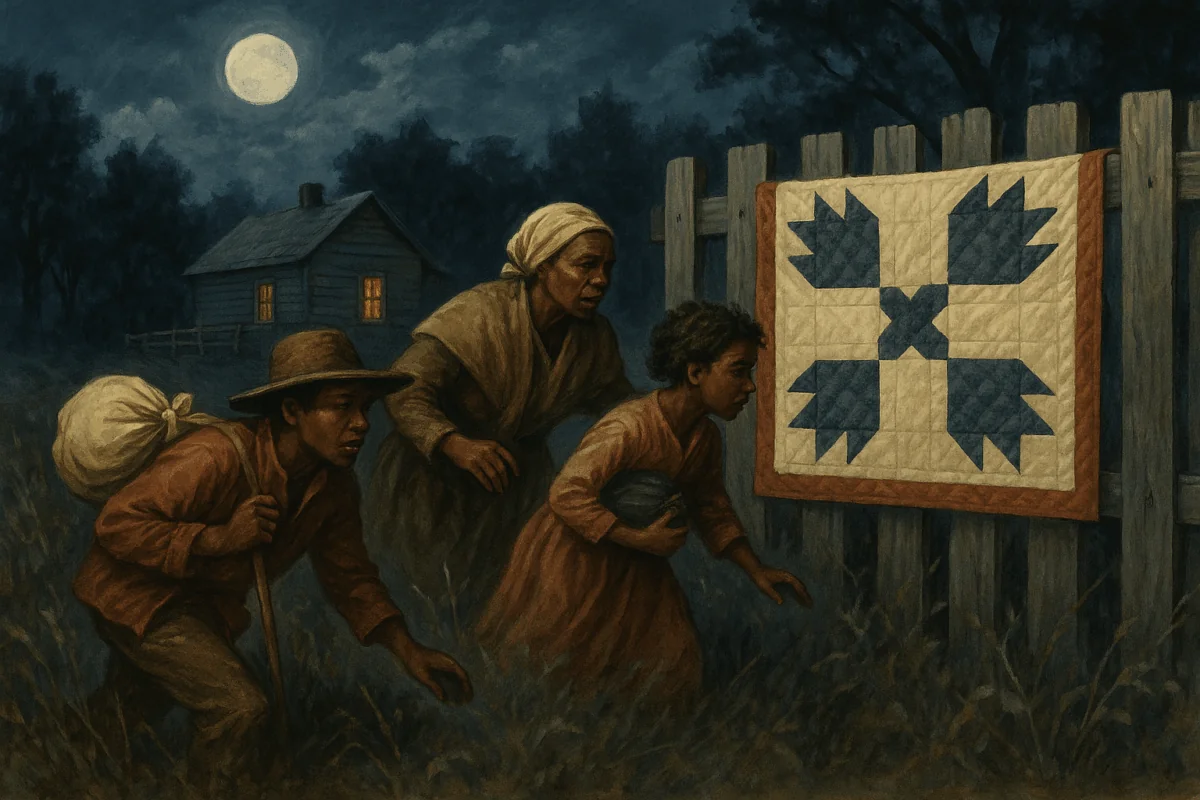
Few stories in American quilting carry as much power as the idea that enslaved people used quilt patterns to communicate secret messages along the Underground Railroad. The image is compelling: a quilt hung on a fence or a clothesline, its blocks a coded map visible to anyone who knew how to read it. Freedom seekers moving north, guided by fabric.
It is also, according to the best available historical evidence, more legend than documented fact. What I want to do in this post is be honest about that distinction, not to diminish the story, but because understanding what quilts actually did in the antislavery movement is just as powerful, and more grounded in what we can verify.
Where the Code Story Comes From
The most widely known version of the quilt code was introduced in 1999 by Jacqueline Tobin and Raymond Dobard in Hidden in Plain View. The book was based primarily on oral history from South Carolina quilter Ozella McDaniel Williams, who described a sequence of specific quilt patterns, Monkey Wrench, Bear Paw, Flying Geese, North Star, each carrying instructions for escape. The story spread rapidly through news coverage, classroom curricula, and museum exhibits, and it continues to resonate with many quilters and educators today.
Tobin and Dobard presented the account as oral tradition, not proven historical record. The challenge that scholars have raised since is that the documentary evidence simply does not exist to confirm a coordinated code system. No diaries, letters, newspaper accounts, WPA slave narratives, or contemporary manuals describe quilts being used this way during the antebellum period.
What the Historical Record Does and Does Not Show
The National Park Service, the International Quilt Museum, and quilt historians including Barbara Brackman have examined the code claim carefully. Their collective findings:
Many of the blocks most often linked to the code, Log Cabin, Drunkard's Path, present timeline problems. Log Cabin designs and the name itself appear in written sources from the early 1860s, which makes their use as established signals in earlier decades difficult to establish. Drunkard's Path is more commonly associated with later temperance activism than with the Underground Railroad era.
Other well-documented signaling systems from this period do not involve quilts. Coded spirituals, lanterns, person-to-person networks, and verbal communication have all left historical traces. The absence of parallel documentation for a quilt code does not prove the code never existed, absence of evidence is not evidence of absence, but it does mean we cannot teach it as established history.
What Quilts Actually Did
Here is what the historical record does confirm: quilts were meaningfully woven into the antislavery movement, just not in the coded-map way the legend describes.
Women's antislavery societies in the 1830s and 1840s used quilts and other handmade goods as fundraising tools at abolitionist fairs. These fairs raised money for publications, speakers, legal defense, and direct material aid to freedom seekers. Surviving documented examples include a star crib quilt connected to abolitionist poet Elizabeth Margaret Chandler and quilts bearing explicit antislavery imagery displayed at public fairs.
Quilts also appear in Underground Railroad history in the straightforward sense: they provided warmth and material comfort to people moving through cold and exposure. Safe houses along freedom routes were not metaphorical shelters. They were physical spaces where people needed to rest and stay warm, and quilts were part of that.
Beyond the Railroad specifically, quilts served as sites of community for enslaved people, spaces of creative expression, of aesthetic choice, of preserving African textile traditions under conditions designed to erase them. That is a form of resistance, even without a code.
How I Approach This in Presentations
I present on African American quilt history at guild events, at Howard University and Georgia Tech, and through community programming. When the code story comes up, and it always does, I present it as what it is: a powerful piece of oral tradition that has inspired generations of quilters, accompanied by an honest account of what historians can and cannot verify.
I also make a point of connecting that conversation to the real history: the fundraising quilts, the documented signaling through song, the preservation of African aesthetic traditions through the craft itself. That history does not need embellishment. It is already remarkable.
If your guild, class, or community group wants to have that conversation, I would welcome it.
More from the Blog
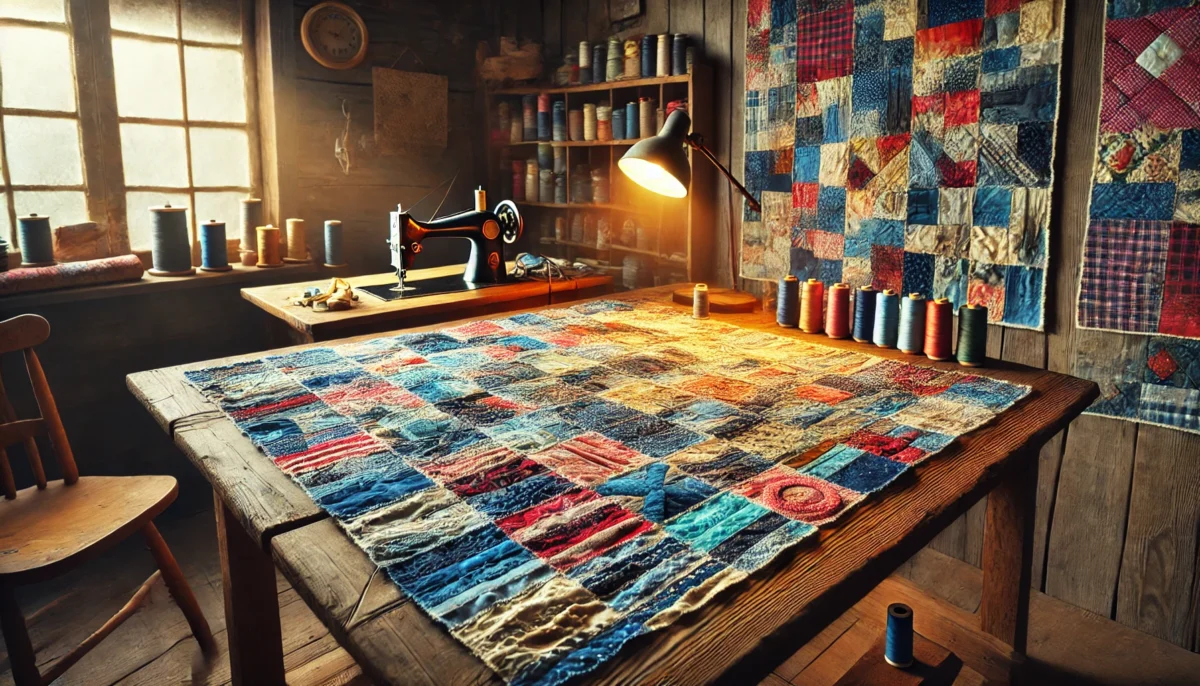
The Meaning Behind Popular Quilt Blocks
From the Flying Geese to the Log Cabin, every quilt block has a history. These patterns carry stories passed down through generations of American quilters.
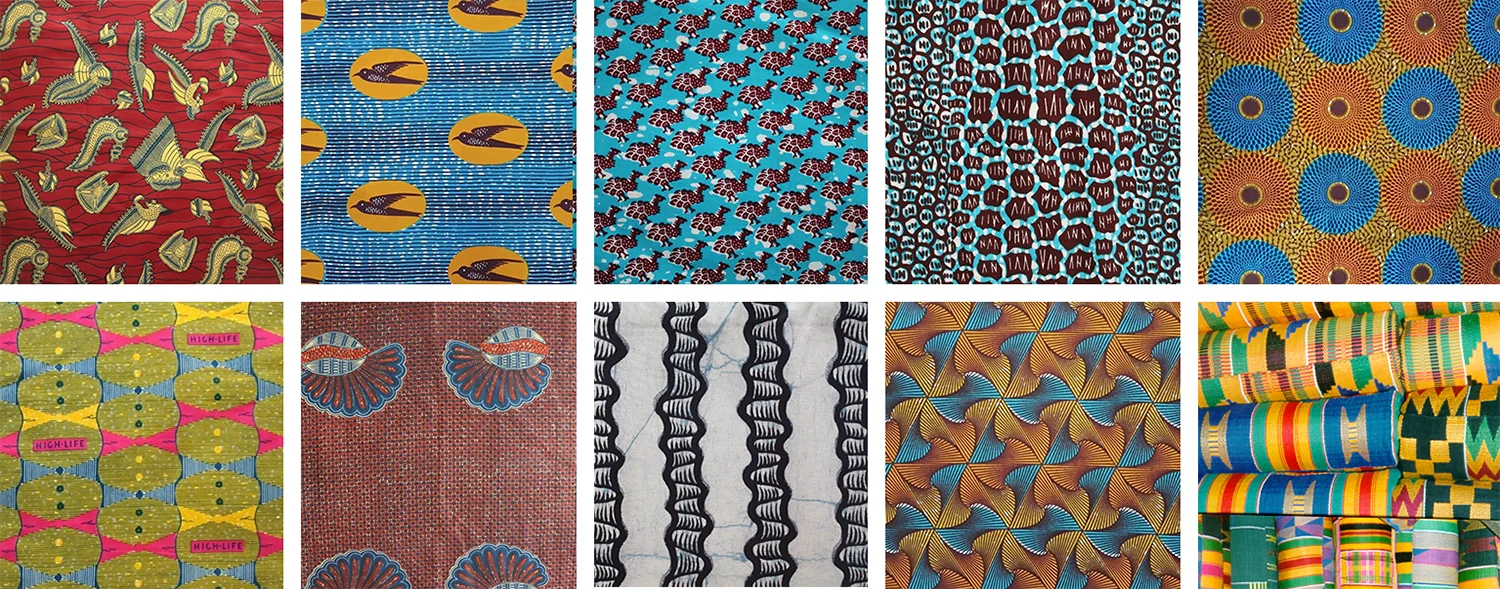
Ten Iconic Symbols in African Print Fabric
African print fabric is one of the most visually rich textile traditions in the world. These ten symbols carry stories of identity, community, and craft.
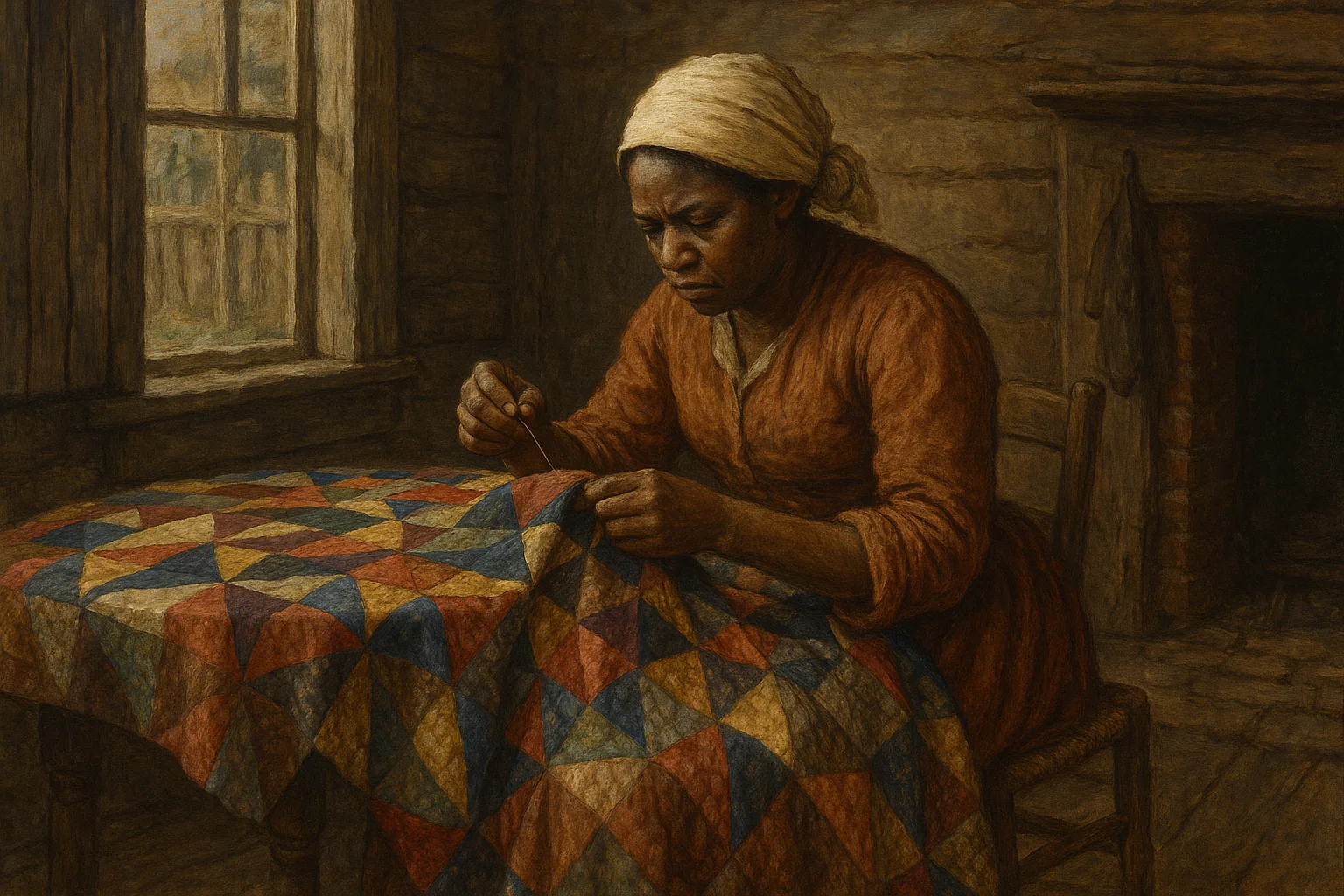
African American Quilt Traditions and the Legend of the Underground Railroad Quilts
African American quilting is a tradition of creativity, necessity, and resistance. This post explores the rich history behind the craft and the community that shaped it.
Want the Real History Told Out Loud?
I give talks on quilt history, block meanings, and African American quilt traditions for guilds, classrooms, and conferences.