The Meaning Behind Popular Quilt Blocks
September 12, 2024 · By Wesley Hall
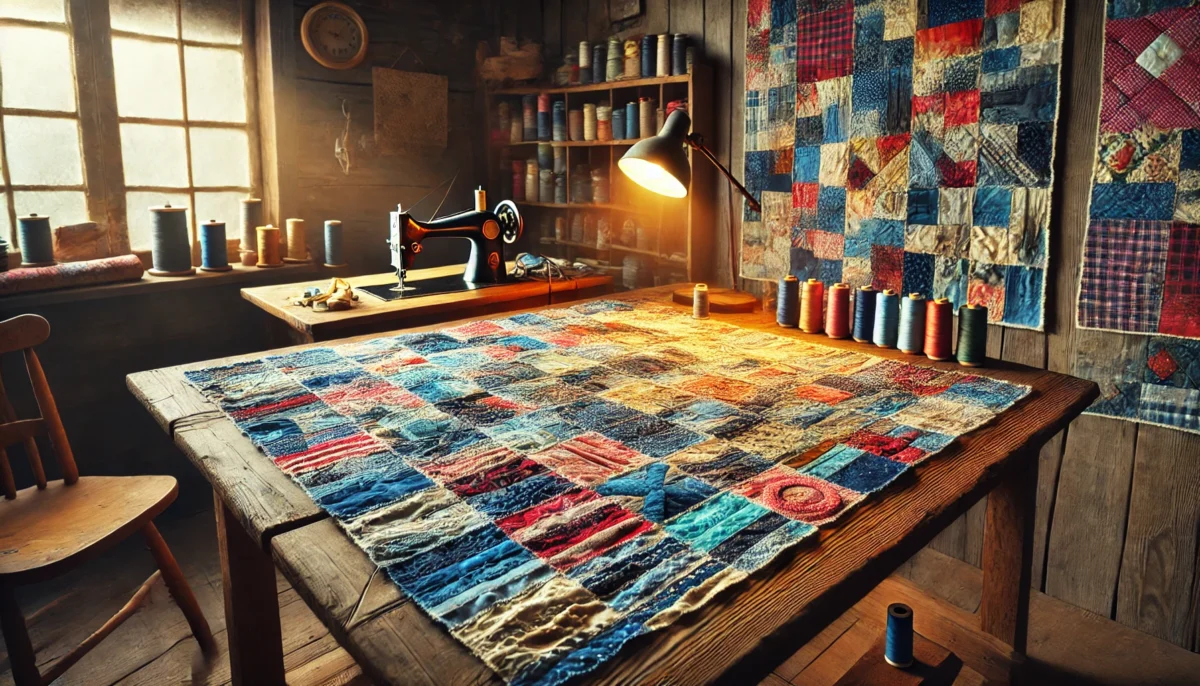
Quilting is not just stitching fabric together. It is storytelling. Every block, every shape, every placement carries a history — whether the quilter who used it knew the full story or not. The patterns we call traditional were developed over generations, passed through communities, and adapted as they traveled. The names stuck. So did the meanings.
I give presentations on quilt history at guild events and classroom settings, and these blocks come up every time. What follows is a working guide to the patterns I find most historically significant and most relevant to the quilts I build today.
Log Cabin
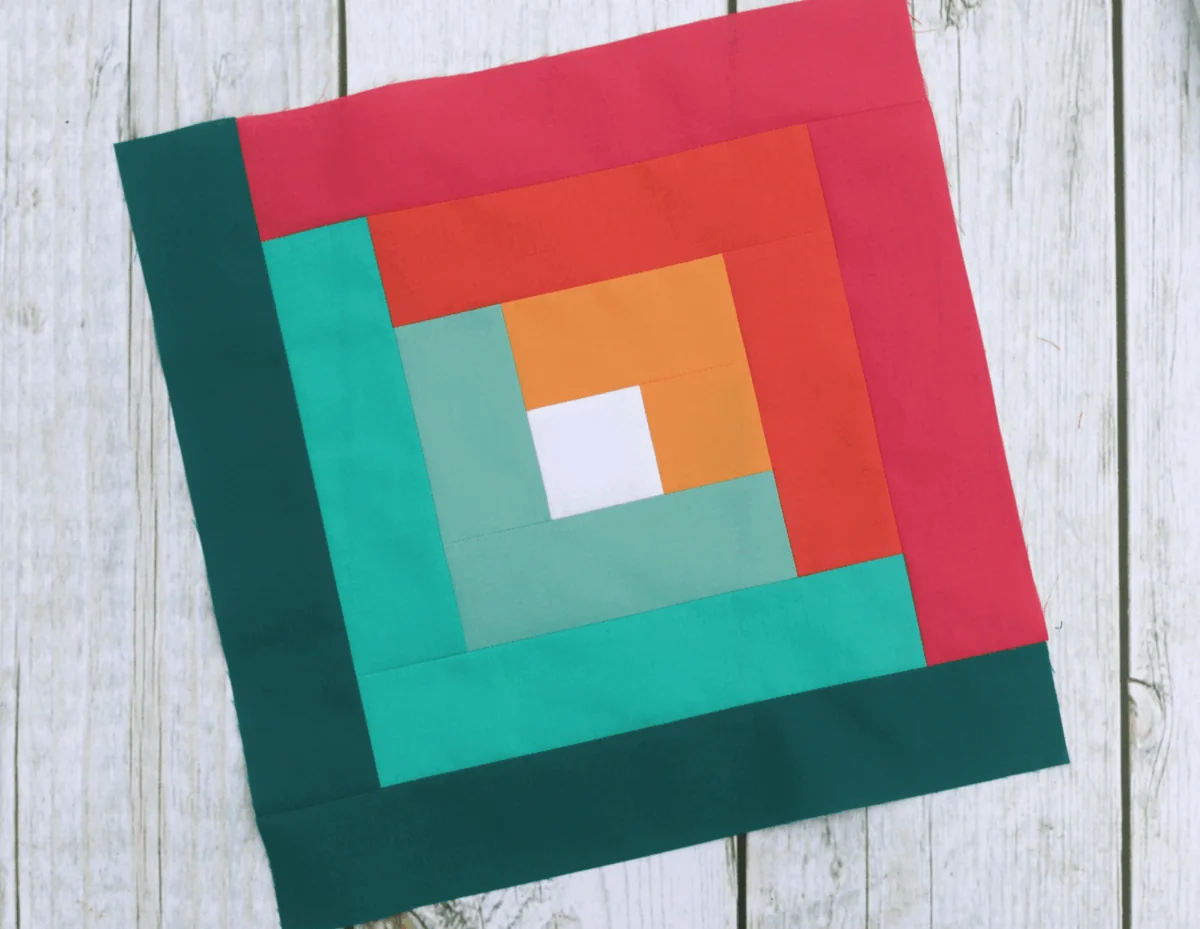
The Log Cabin block is one of the most widely recognized patterns in American quilting. It is built by adding strips of fabric around a central square — like logs stacked around the hearth of a cabin. Traditionally, one half of the block uses light fabrics and the other dark, creating a visual split that represents the interplay of warmth and cold, or light and shadow.
The center square carries particular weight. A red center traditionally symbolizes the hearth — the heart of the home, the source of warmth and stability. In the context of the Underground Railroad legend, a black center was said to signal a safe house along the route north. Scholars note that this specific attribution is difficult to verify historically, but the Log Cabin's association with shelter and home is consistent across the tradition.
When I use Log Cabin blocks in a custom quilt, I think about what home meant to the person being honored. It is rarely just a building.
Flying Geese
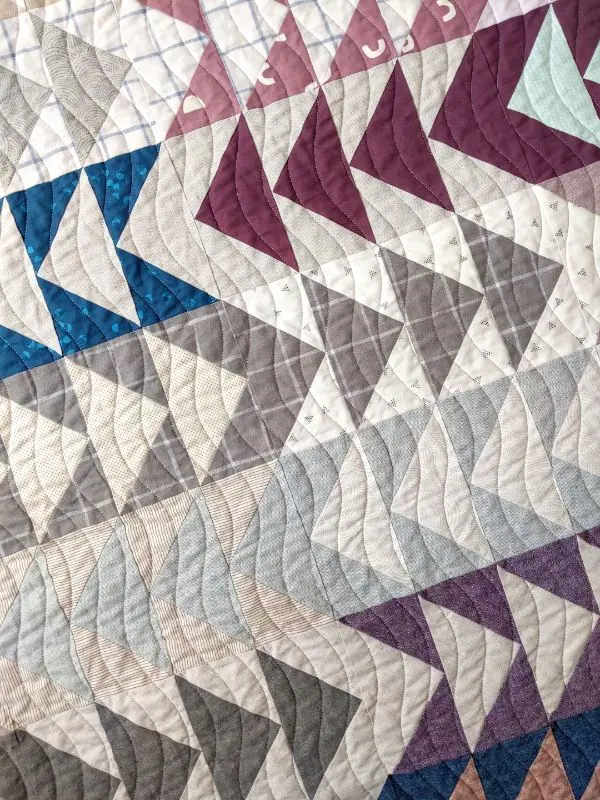
Flying Geese is made from triangular units — a large center triangle flanked by two smaller ones — repeated in a row that suggests motion and direction. The name comes from the V-formation of migrating geese, which historically pointed the way north as the seasons changed.
The block has long been associated with transition and new beginnings. In the Underground Railroad legend, Flying Geese was said to signal safe paths and indicate a change of direction ahead. Whether or not that specific use is historically verifiable, the imagery is apt. The pattern looks like something heading somewhere with purpose.
I reach for Flying Geese when someone is moving into a new chapter — graduating, retiring, relocating, starting over. The block feels right for those moments.
Bear Paw
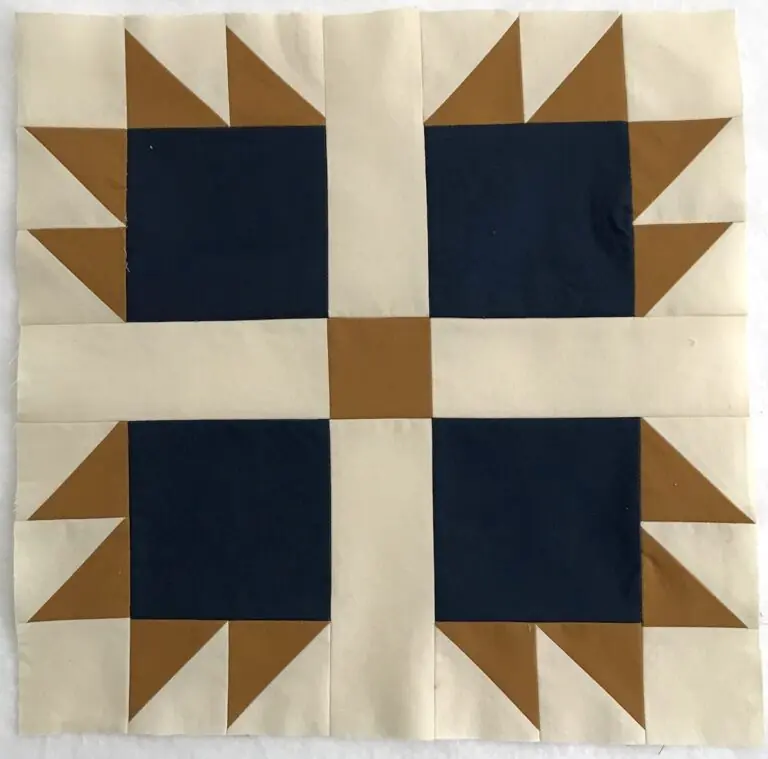
The Bear Paw block is bold and graphic — a large center square with triangular corner units that suggest the spread of a paw print. It represents strength, guidance, and the ability to navigate difficult terrain.
In some traditions, the Bear Paw was associated with following the literal path of bears through wilderness — animals that know where the food, water, and shelter are. For freedom seekers moving north on foot through unfamiliar land, that kind of knowledge mattered. The block is also connected more broadly to the idea of a protector — someone whose strength made a path possible for others.
I use Bear Paw in quilts for people who showed that kind of strength: parents who carried families through difficulty, veterans, caregivers, the ones who made things possible without asking for recognition.
North Star
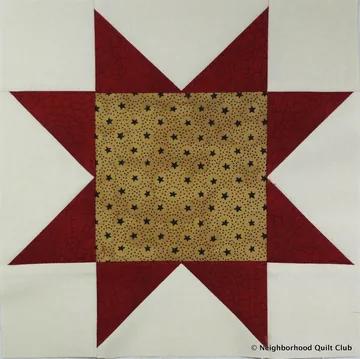
The North Star block — sometimes called the Lone Star or Star of Bethlehem in wider quilting tradition — takes its Underground Railroad name from Polaris, the fixed point in the northern sky that guided travelers moving by night. "Follow the Drinking Gourd" was the instruction, pointing to the Big Dipper constellation and from there to the North Star.
Unlike other stars, Polaris does not arc across the sky. It holds still. That steadiness is what made it useful — and what makes the block meaningful as a symbol of direction and purpose when everything else is uncertain.
The North Star pattern works in quilts honoring people who provided that kind of fixed point in a family — the ones everyone else found their bearing by.
Crossroads
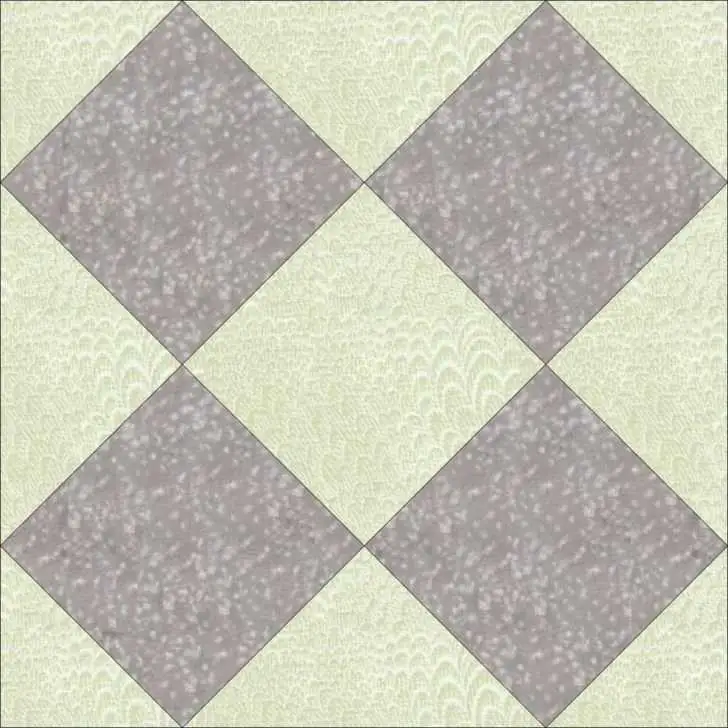
The Crossroads block is a plus or cross shape — two strips of contrasting fabric intersecting at the center. In the Underground Railroad legend, Crossroads was said to signal Cleveland, Ohio, a critical junction where freedom seekers faced a real decision: continue north to Canada for legal protection under British law, or try to settle in a northern free state and risk recapture.
The symbolism of the crossroads extends far beyond that specific history. Crossroads appear in folklore across many cultures as the place where decisions are made, where paths divide, where different futures become possible. The block carries all of that.
Double Wedding Ring
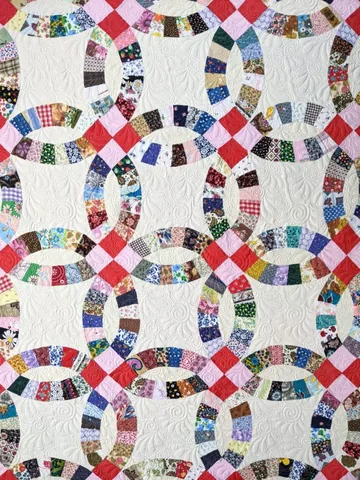
The Double Wedding Ring pattern is made from interlocking curved rings, each typically assembled from small arcs of varied fabric. The rings connect across the quilt face in a chain that has no clear beginning or end. It represents unity, partnership, and the interweaving of two lives.
This block appeared frequently in quilts made as wedding gifts or to mark significant anniversaries. It requires more precision than most traditional blocks — the curved seams demand care — and that difficulty is part of the tradition. The quilt communicates that the relationship it is celebrating was worth the effort.
Nine Patch
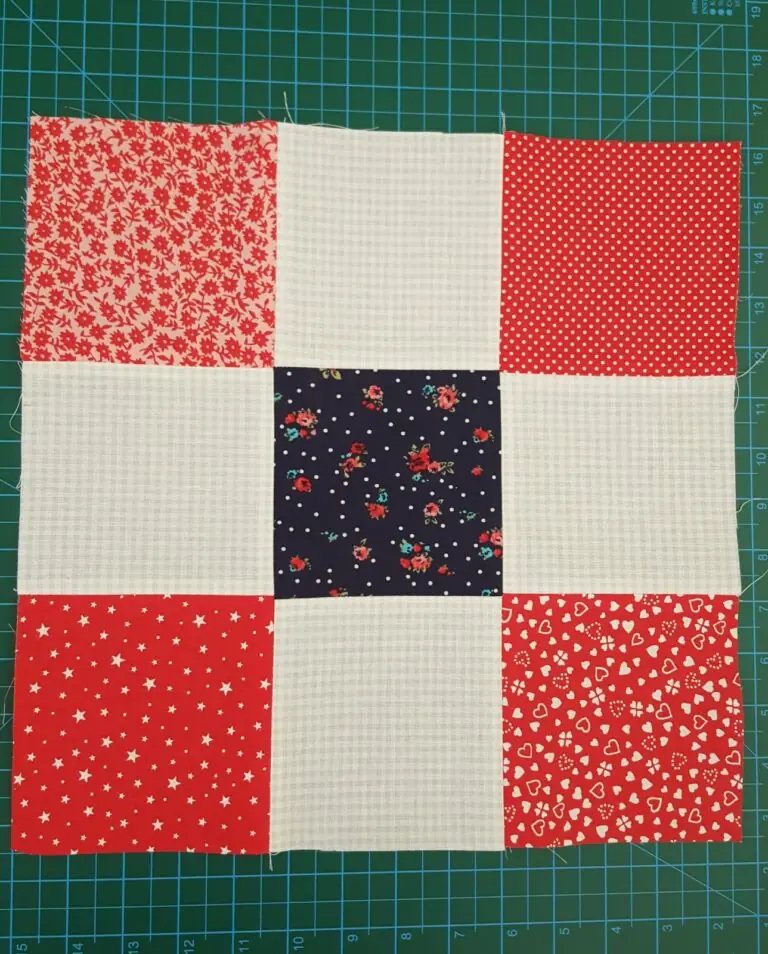
The Nine Patch is the foundation of quilting: nine equal squares arranged three by three, alternating between two fabrics. It is the first block most quilters learn. It is also endlessly adaptable — Nine Patches can be combined, rotated, and nested to create complex secondary patterns across a quilt top.
What the Nine Patch represents most is the logic of quilting itself. Simple units, carefully joined, creating something larger than any individual piece. That principle applies to the block and to most things worth building.
On Using These Patterns Today
The history of quilt blocks is not always clean. Some attributions are well documented. Others — particularly those linked to the Underground Railroad code theory — are contested by historians, who note that documentary evidence from the antebellum period is thin. What the scholarship does confirm is that quilts played real roles in the abolition movement: raising funds at antislavery fairs, carrying messages in their construction, and serving as tangible expressions of community and resistance.
Whether the specific code attributions are historically precise or not, the patterns carry meaning for the communities that made them and continue to make them. When I use these blocks in a custom quilt, I am working inside that tradition — bringing the pattern's history into contact with a specific person's story and letting the two speak to each other.
If you are interested in a quilt that incorporates traditional blocks with deliberate meaning, reach out. These are some of my favorite design conversations.
Build a Quilt With Deliberate Block Choices
Let's talk about the patterns that matter to you and design a quilt that carries them forward.
More from the Blog
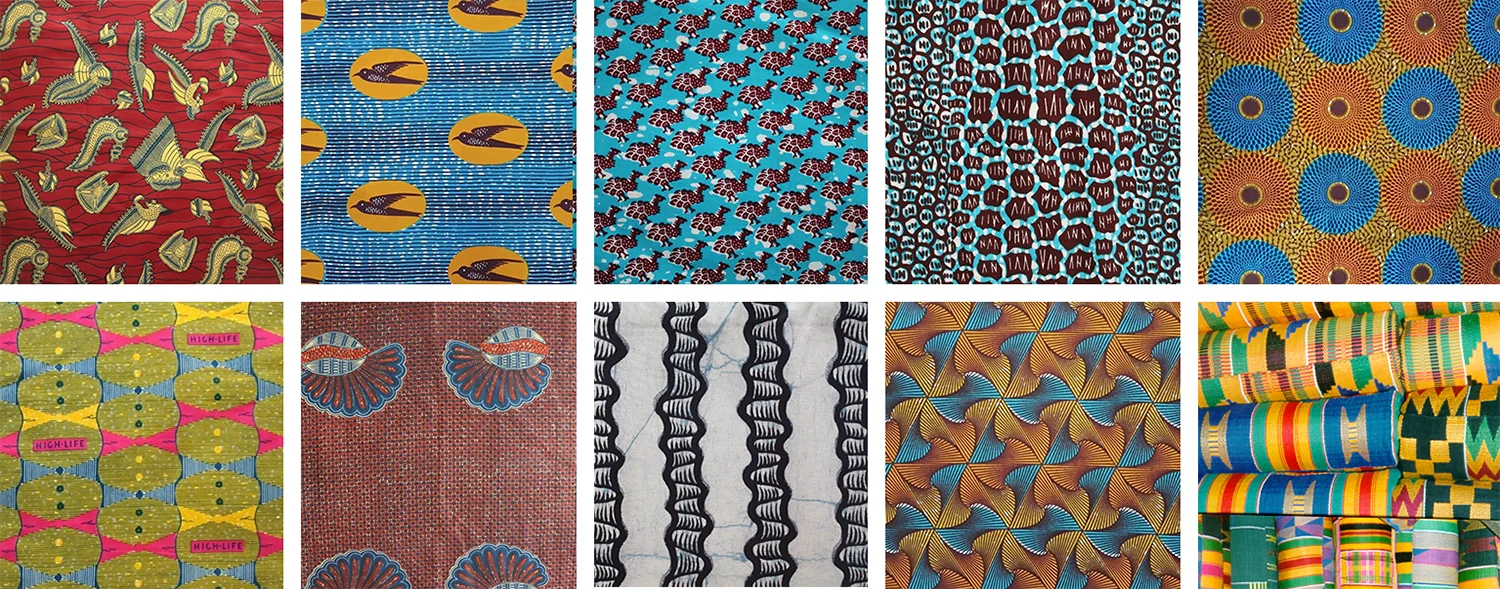
Ten Iconic Symbols in African Print Fabric
African print fabric is one of the most visually rich textile traditions in the world. These ten symbols carry stories of identity, community, and craft.
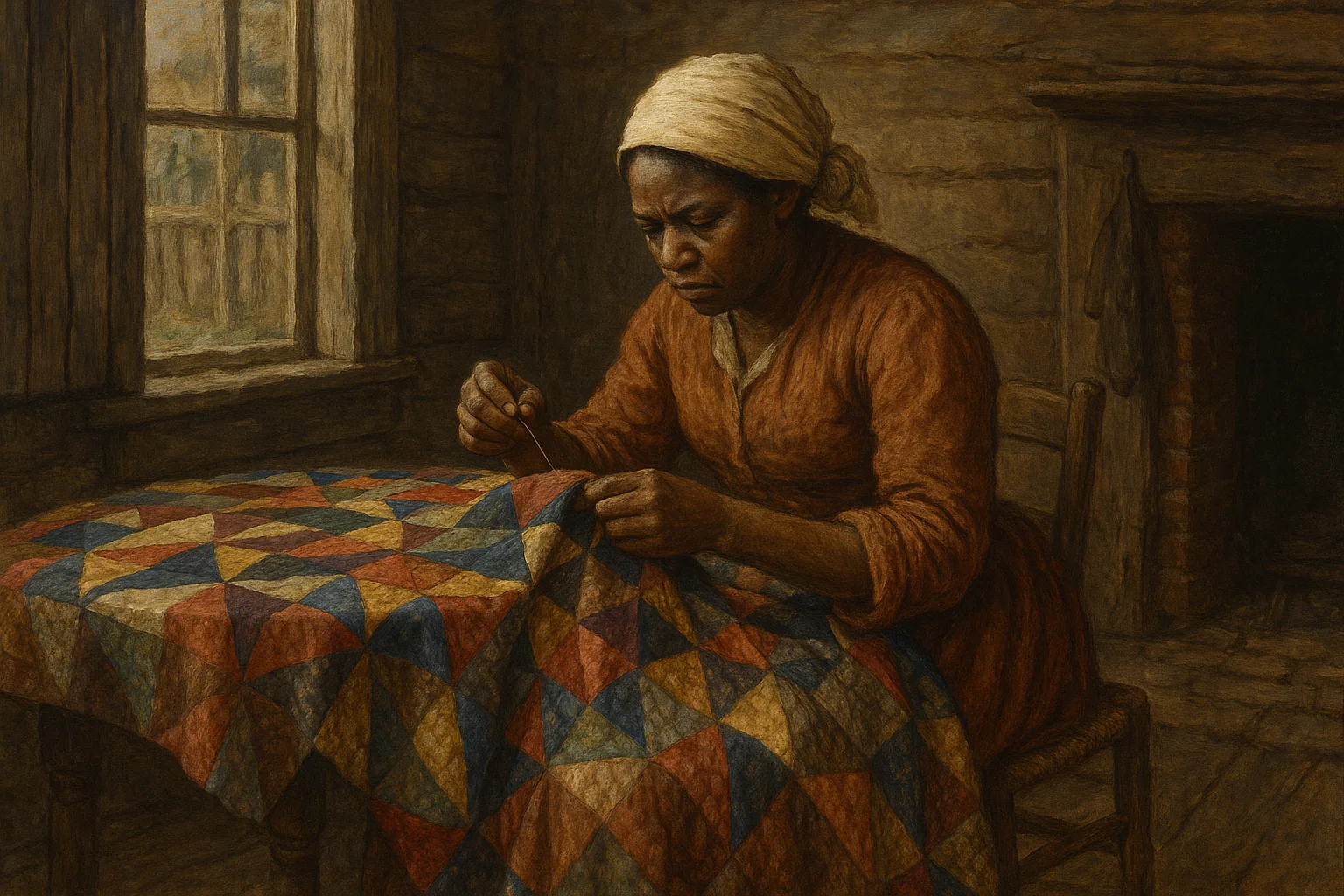
African American Quilt Traditions and the Legend of the Underground Railroad Quilts
African American quilting is a tradition of creativity, necessity, and resistance. This post explores the rich history behind the craft and the community that shaped it.
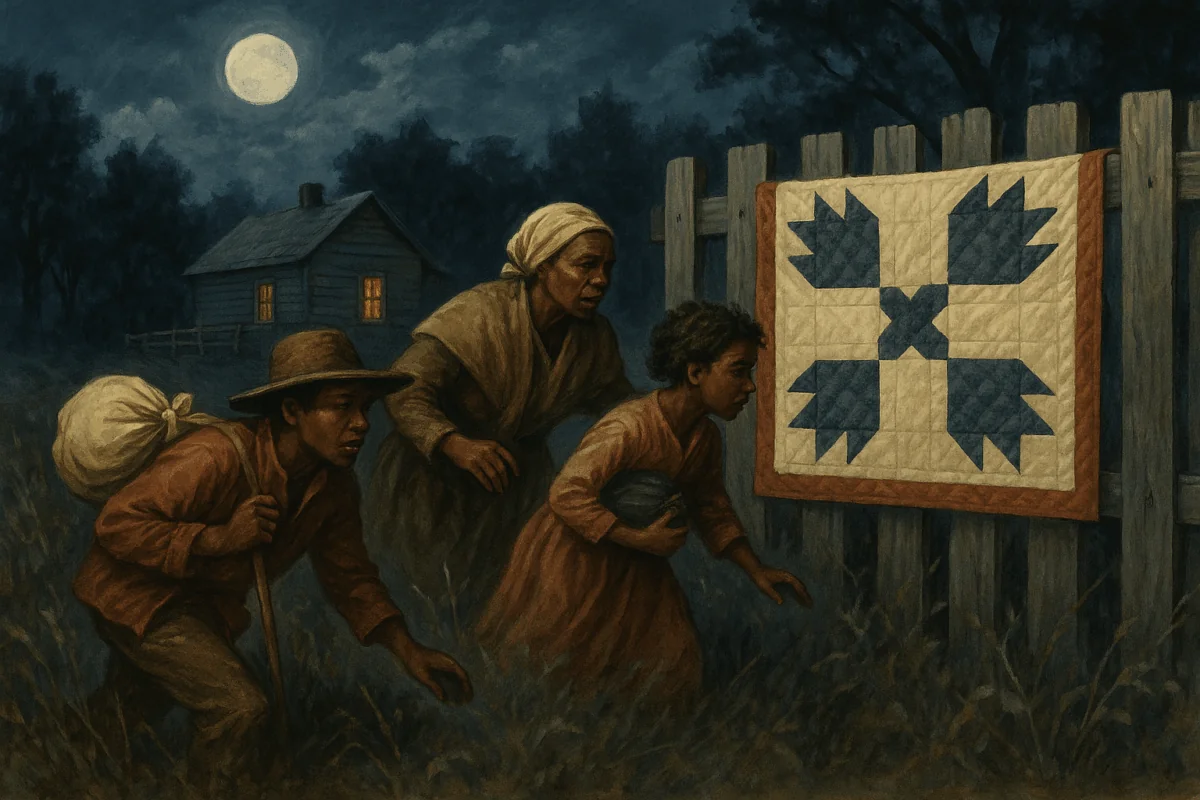
Underground Railroad Quilt Patterns and Their Stories
The theory that quilts guided freedom seekers north is one of the most powerful stories in American quilt history. Here is what the research actually shows.
Want Intentional Block Choices in Your Quilt?
Schedule a free consultation. We can talk through which patterns fit the story you want to tell and how to build the design around them.