
Short answer
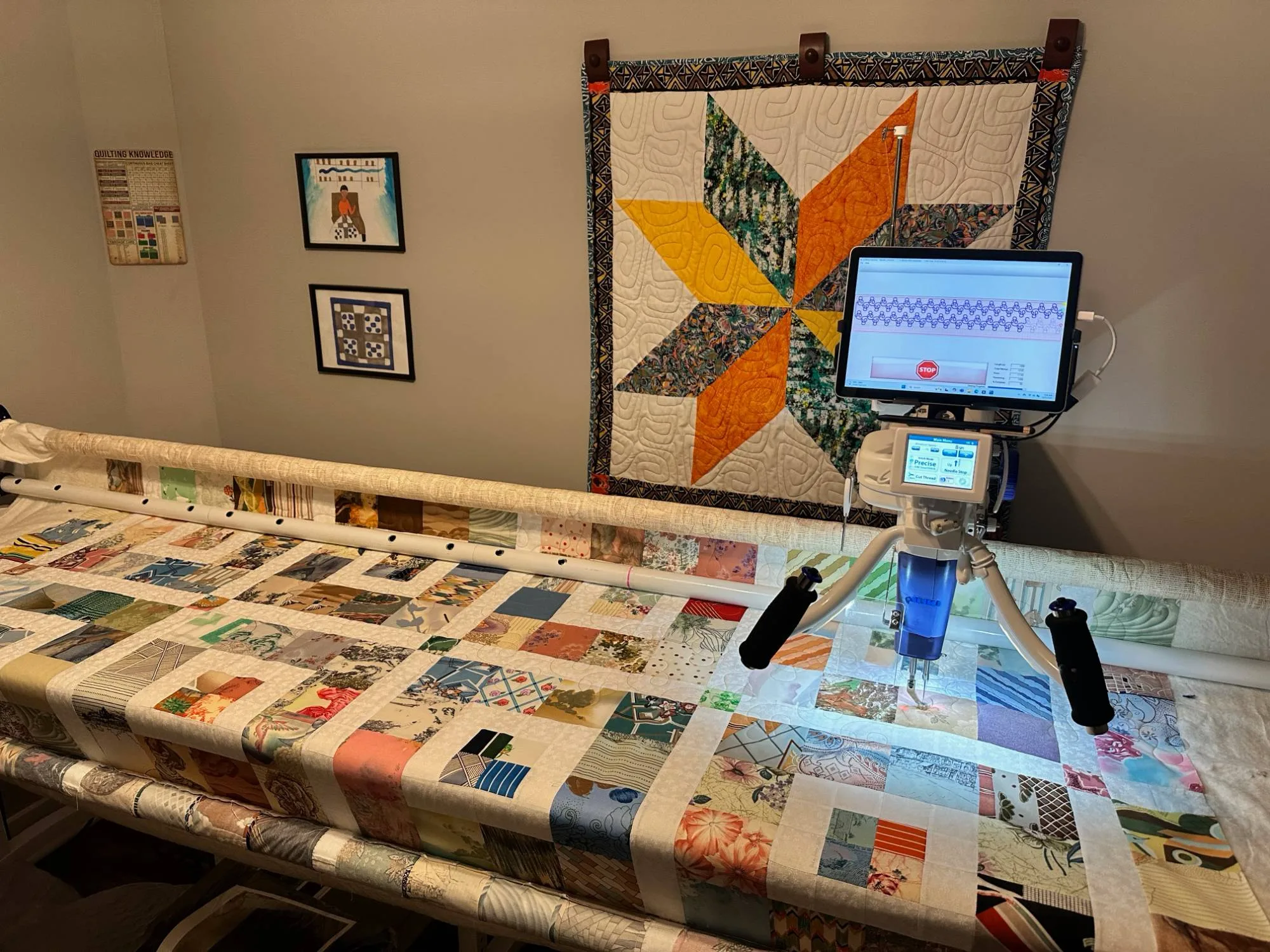
Lingerie fabric is thin, slippery silk and silk blends, so it has to be stabilized before it can go into a quilt. I fused lightweight fusible interfacing to the back of the pieces under a press cloth, which made them cut and sew like cotton. On the longarm I dropped from a size 18 needle to a size 16 and quilted an edge to edge circular pantograph called Water Bubbles.
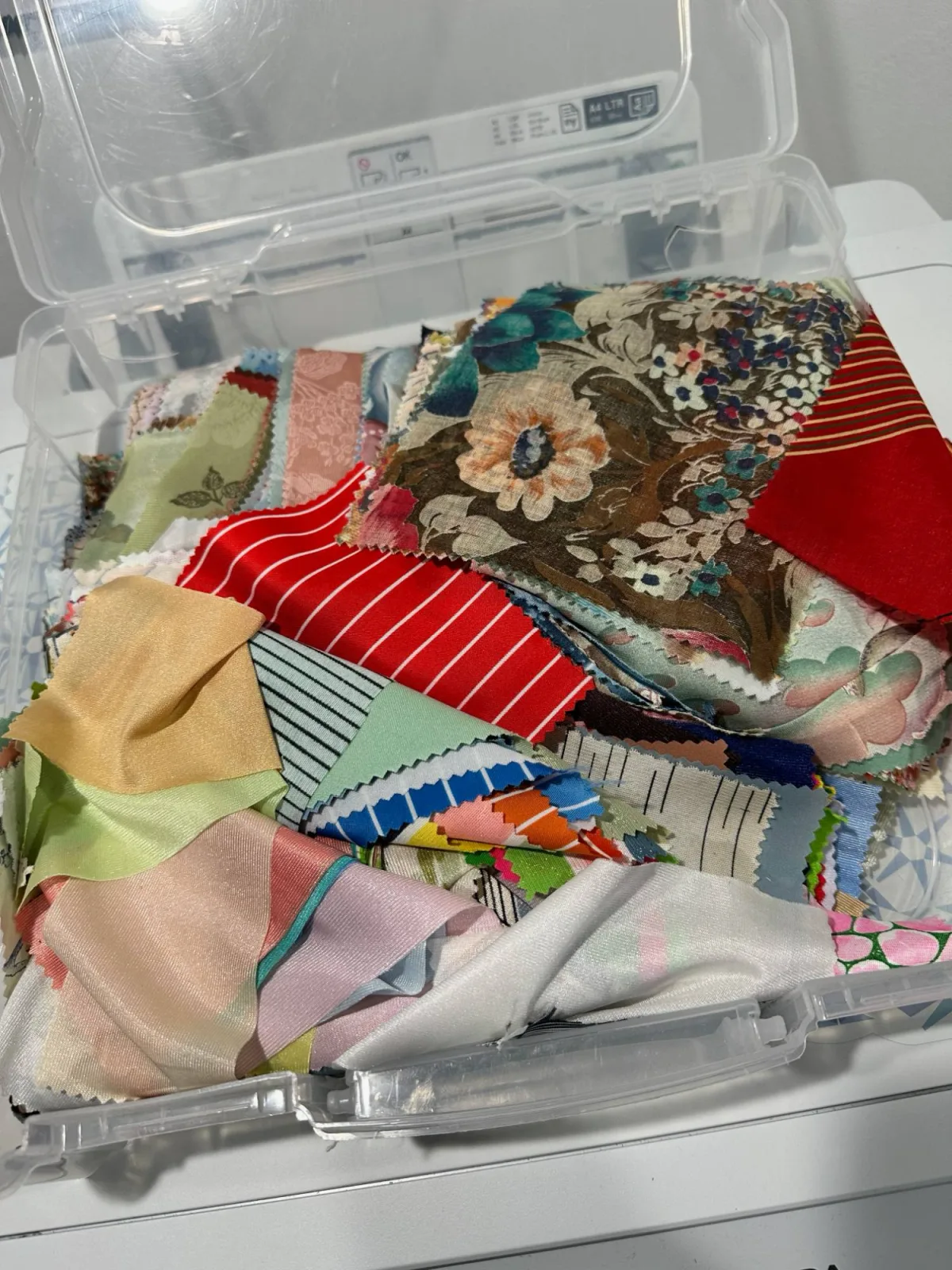
The scraps came to me in a clear plastic bin, and when I opened the lid the whole thing slid.
Satin over silk over something with a sheen I couldn't name, all of it pouring toward one corner of the bin like water finding a drain. A red stripe so glossy it practically had its own light source. Pale greens, peaches, and pinks. Florals. A lot of pieces had pinked edges, that zigzag cut you get from pinking shears.
Every one of them came out of a lingerie store. The woman this quilt was for had worked in that store for twenty years, and for twenty years she kept the scraps.
I love that. Most people's careers leave behind a few performance reviews and a mug. She left herself a bin of silk, and she held on to it until she found someone who could turn it into something.
Silk has been causing trouble for a long time
Most quilts are made from quilting cotton, which is about the most cooperative fabric on earth. It holds a crease. It stays where you put it. You can press it hard and it thanks you.
Silk does none of that. Lingerie fabric is made to be light and to drape against skin, which is exactly what you don't want in a quilt block. It slips under the ruler, it frays at the cut edge, and it shows every needle hole.
People have been fussing over silk for a couple thousand years. China kept the secret of making it for centuries, and the story goes that two monks finally smuggled silkworm eggs out to the Byzantine emperor Justinian hidden inside hollow walking sticks. Industrial espionage, sixth century edition. I didn't have to smuggle anything. I just had to keep it from sliding off my cutting mat.
Quilters have their own history with it, too. The Victorians loved silk for their crazy quilts, and a lot of those quilts are coming apart in museum storage today. Some of the silk from that era was weighted with metal salts to make it feel heavier and more expensive, and over the years that silk splits and shatters. I have no idea how a modern silk blend will hold up over a century. I just wasn't going to give it any help falling apart.
Stabilizing the silk before cutting
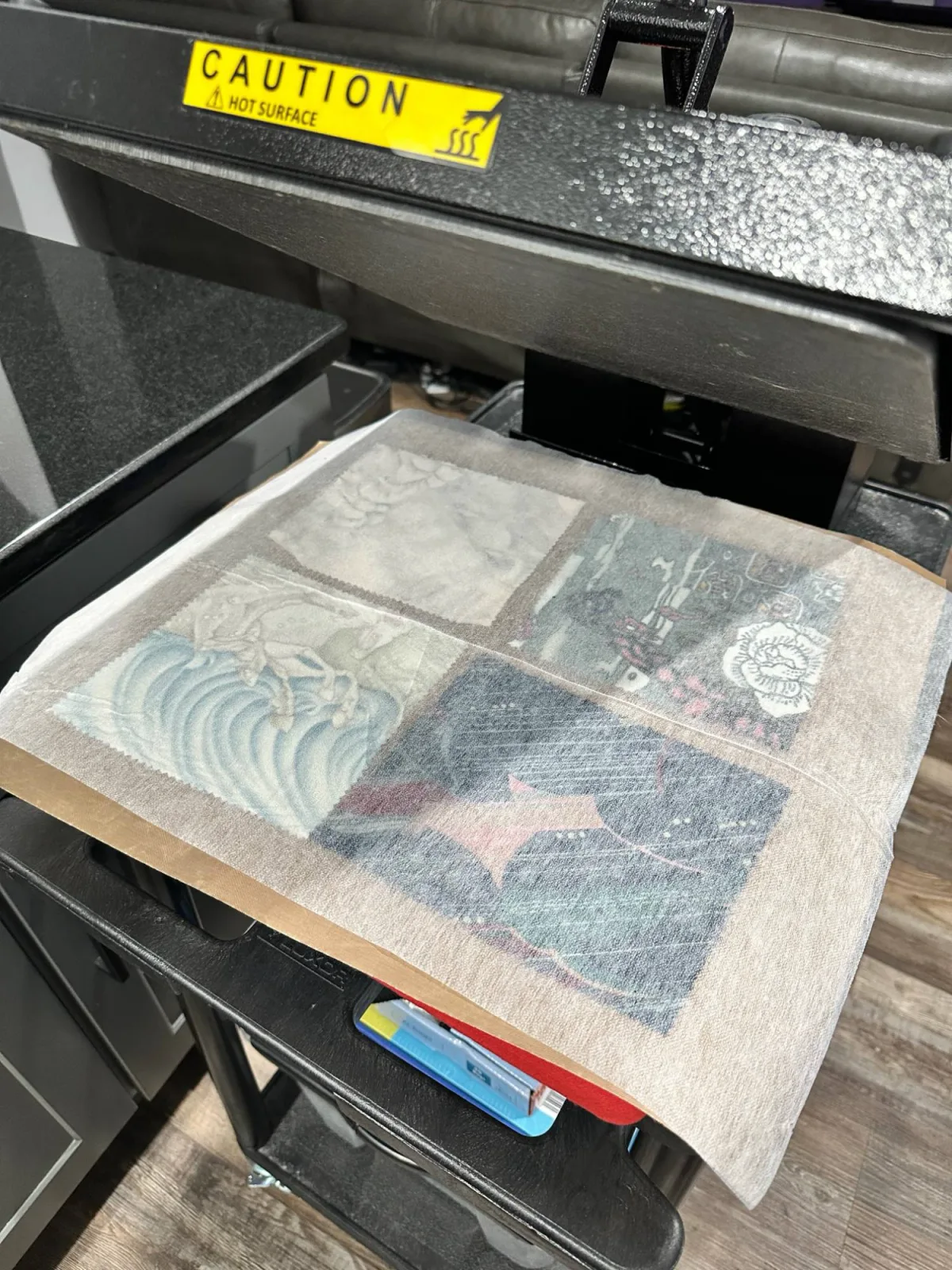
Before I cut a single square, I fused lightweight fusible interfacing to the back of the silk and silk blend pieces. I did it on my heat press, several swatches at a time, with a press cloth over everything to keep the silk from scorching and the glue off the press.
The interfacing gives silk the body of cotton. Once it's fused, the fabric holds its shape, the rotary cutter goes through it clean, and the seams sew straight. It also keeps the cut edges from fraying while you work, which matters a lot when you're handling hundreds of small pieces.
It's slow. It's also the step that makes everything after it possible.
The layout
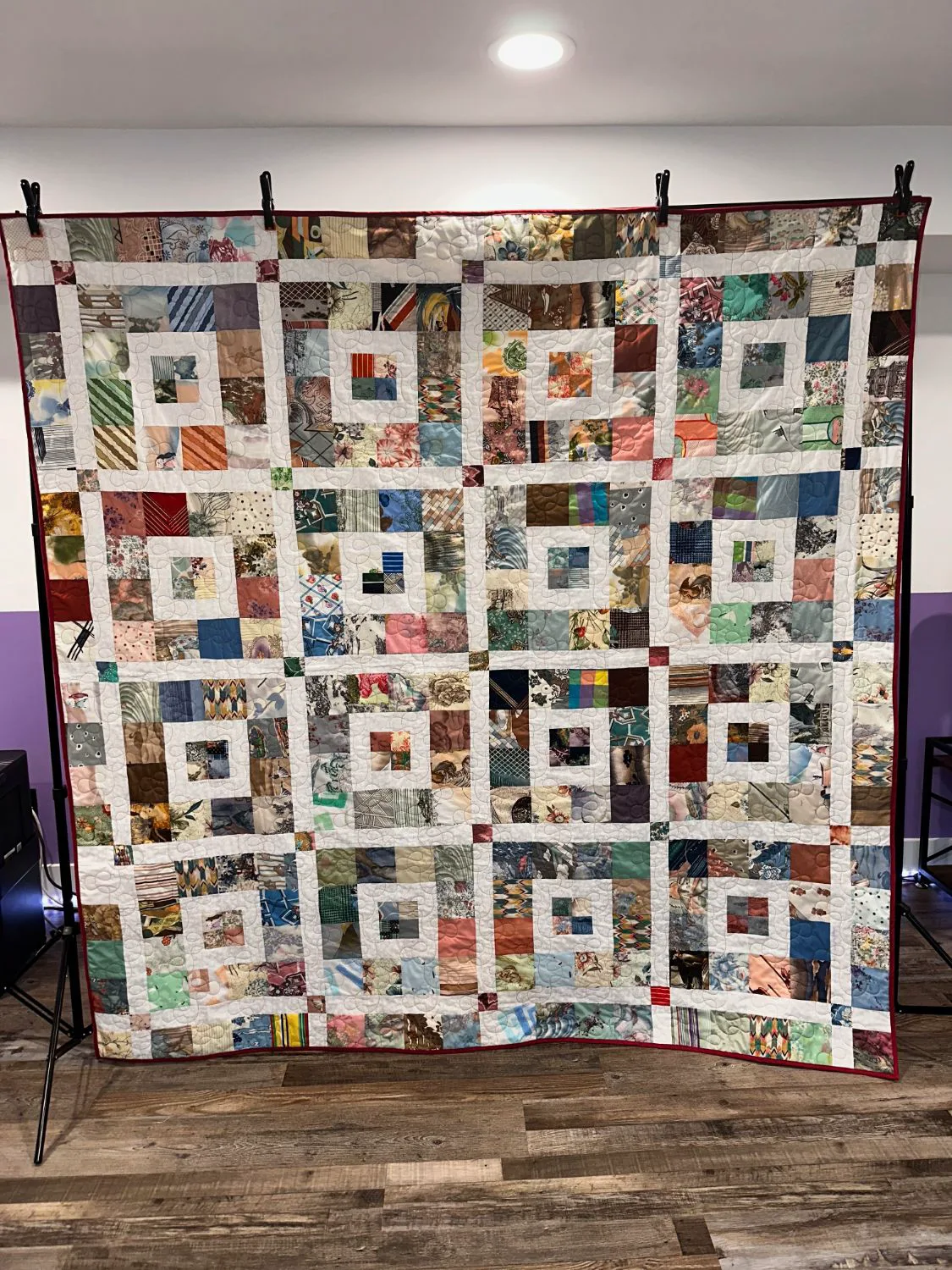
Each block has a little four patch at the center, a white frame around that, and a ring of twelve larger squares around the frame. Sixteen blocks, four across and four down, with white sashing between them and small scrappy cornerstones where the sashing meets. That adds up to more than 250 squares of lingerie fabric, and I don't think any two of them match.
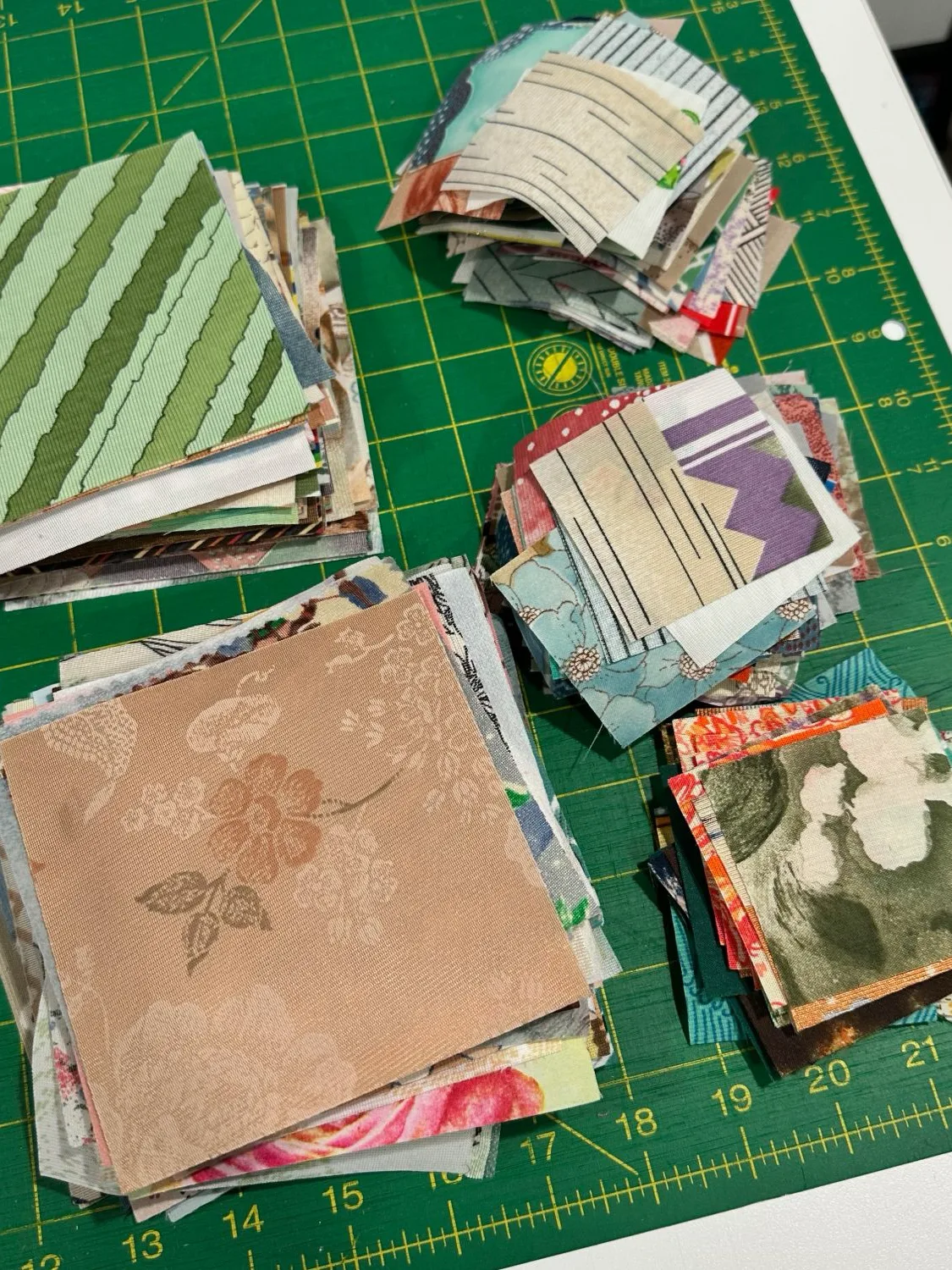
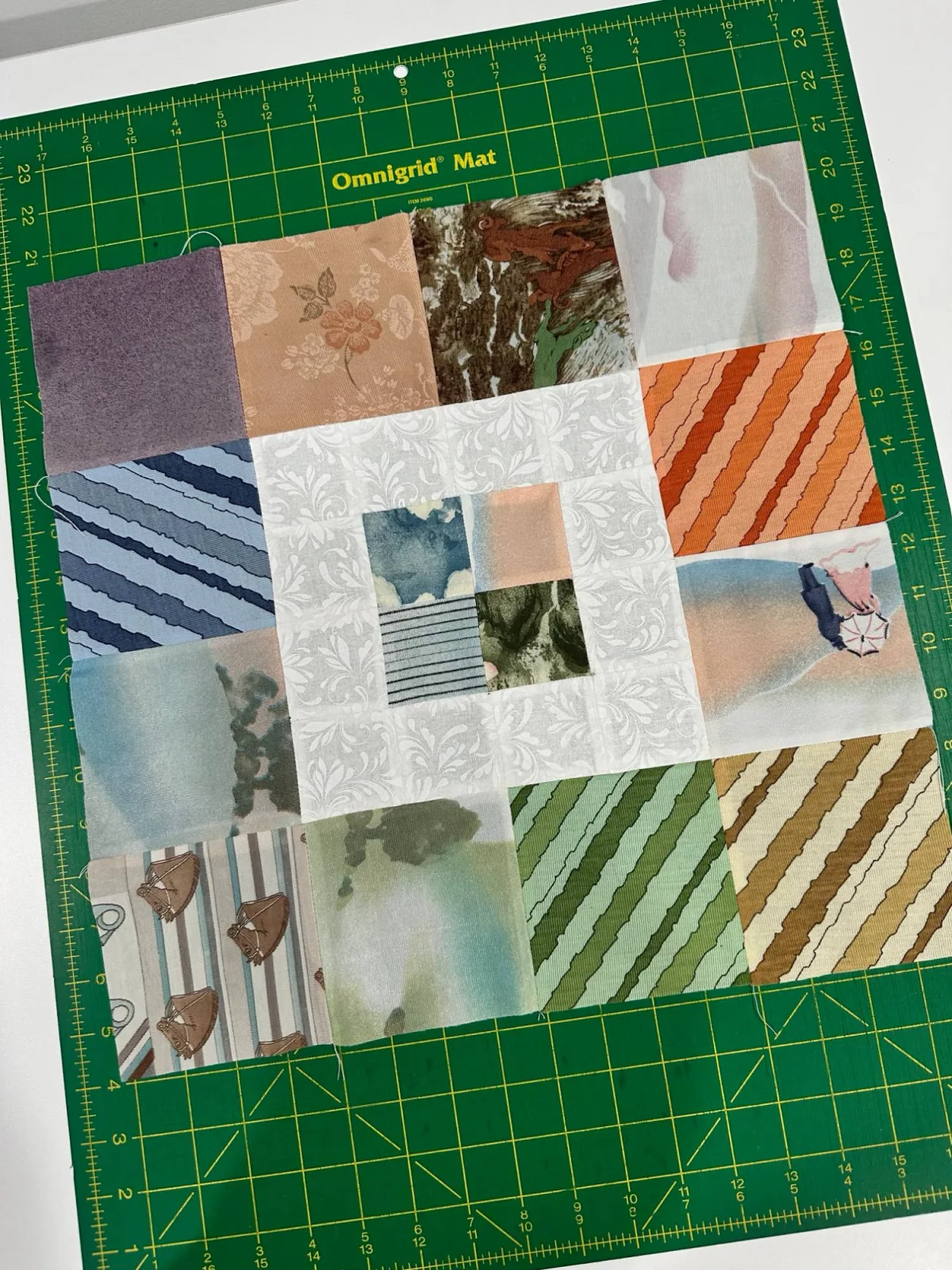
With that many colors and prints, the white does the heavy lifting. It gives your eye somewhere to rest, and it keeps the shiny fabrics from running together into one big blur. I used a white tone on tone with a soft leaf print, so even the quiet parts have a little texture.
Quilting it on the longarm
I quilt on a Juki longarm, and my usual needle is a size 18. For this quilt I dropped down to a size 16.
Cotton is forgiving about needle holes. The fibers close back up around them and you never see where the needle went. Silk isn't like that. A bigger needle leaves a bigger hole, and on a satin finish you can spot it from across the room. The smaller needle was the difference between quilting the silk and punching holes in it.
For the quilting design I picked a circular pantograph called Water Bubbles. It runs edge to edge across the whole quilt, loops and circles that keep rolling from one side to the other. The piecing is a strict grid of squares, and I wanted the quilting to bring some flow and motion back on top of it. These fabrics were made to move. It felt wrong to pin them down with straight lines.
What the quilt holds
She was so excited to see it finished. Twenty years of her working life, and here it was, all in one place, something that paid homage to every one of those years.
I keep thinking about what that fabric was for. Lingerie is the part of an outfit nobody else is supposed to see. For twenty years those silks were hidden under somebody's clothes.
Now they're the whole show.
Bring a scrap quilt story to your guild
I talk with guilds about memory quilts and working with unusual fabric, and I bring quilts like this one so you can see the seams up close.
More from the Blog
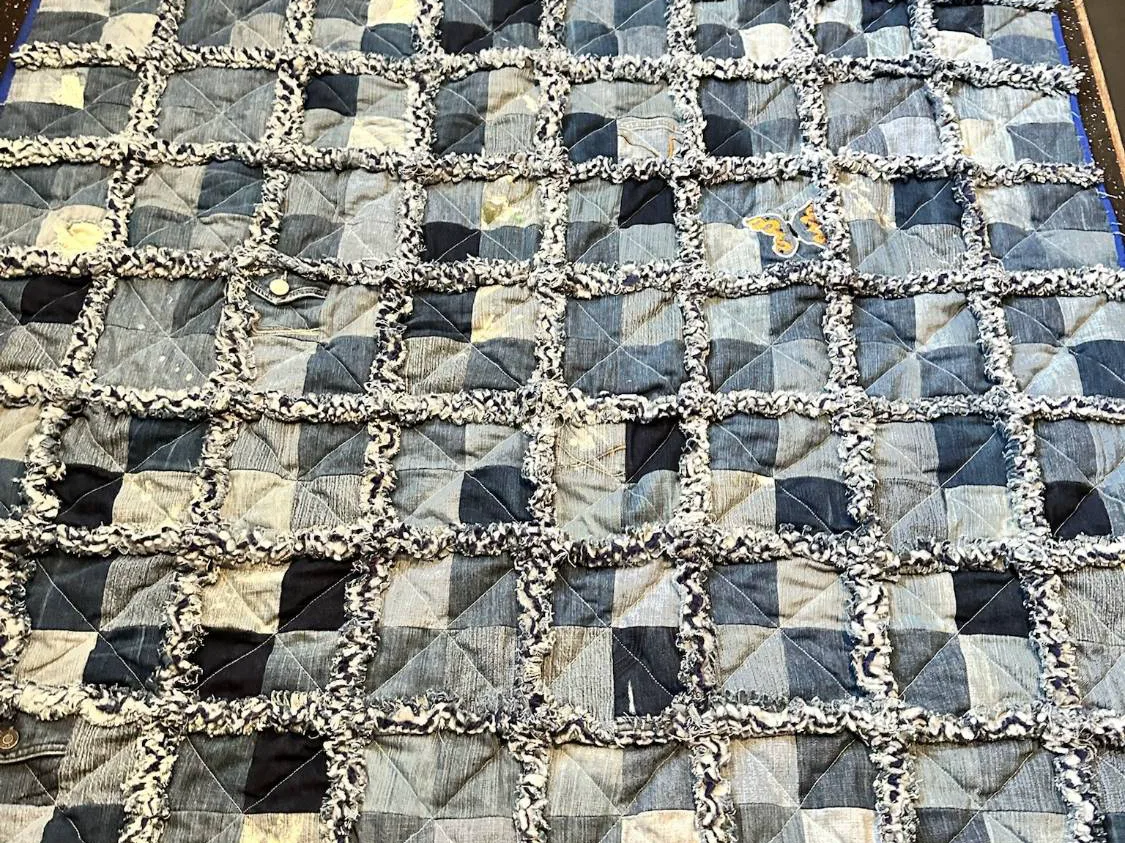
Paint-Stained Jeans and Donated Scraps: Two Denim Quilts
How I turned an artist's paint-stained jeans into a denim rag memory quilt, and built a trunk show quilt from donated denim scraps and African wax prints.
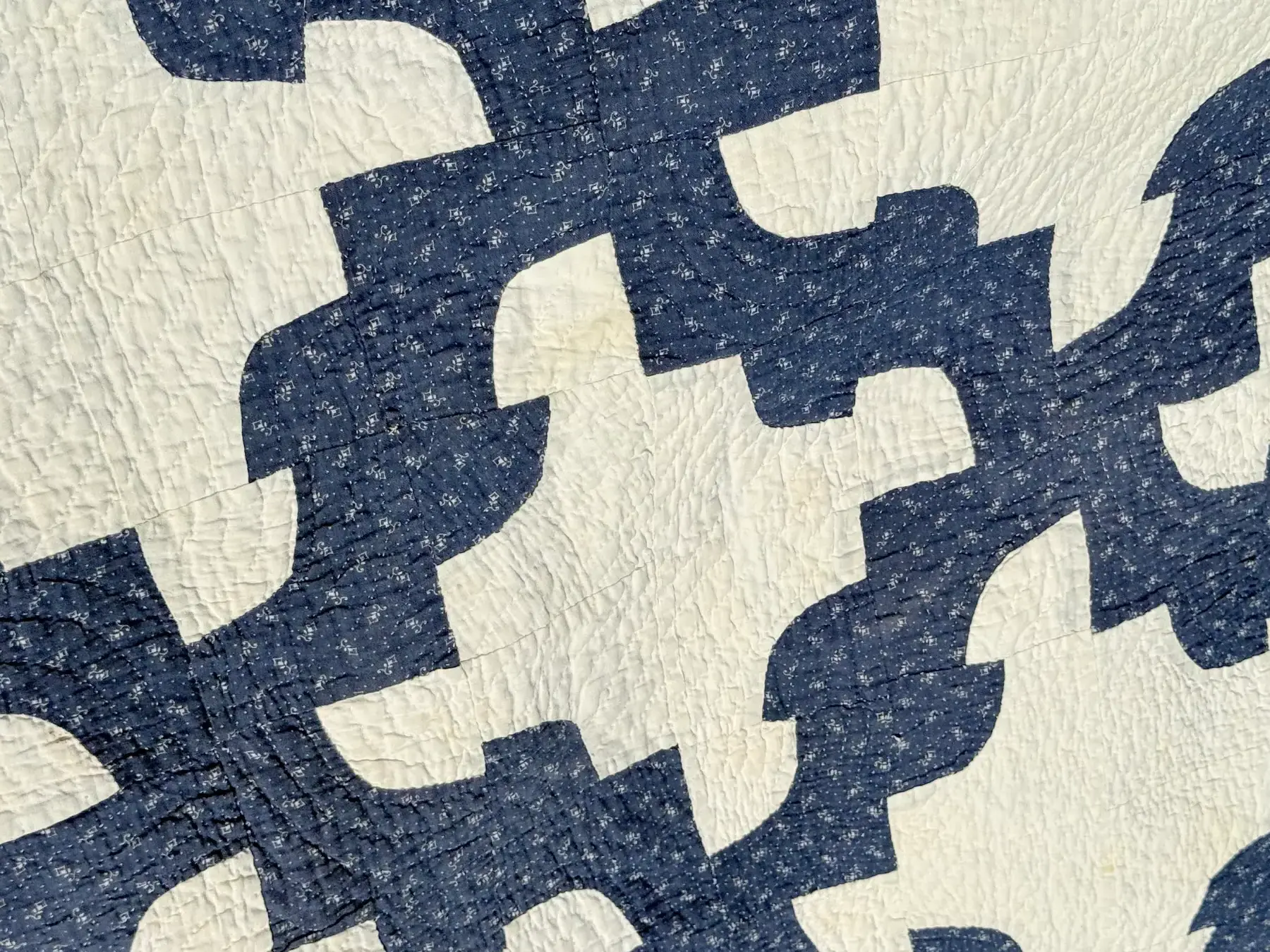
The Drunkard's Path Block and What Temperance Had to Do With It
The Drunkard's Path quilt block answers to a dozen names. Here is what the temperance record supports, what it does not, and why the curves still humble me.
OV Brantley, the Quilter Who Would Not Cut the Rosettes
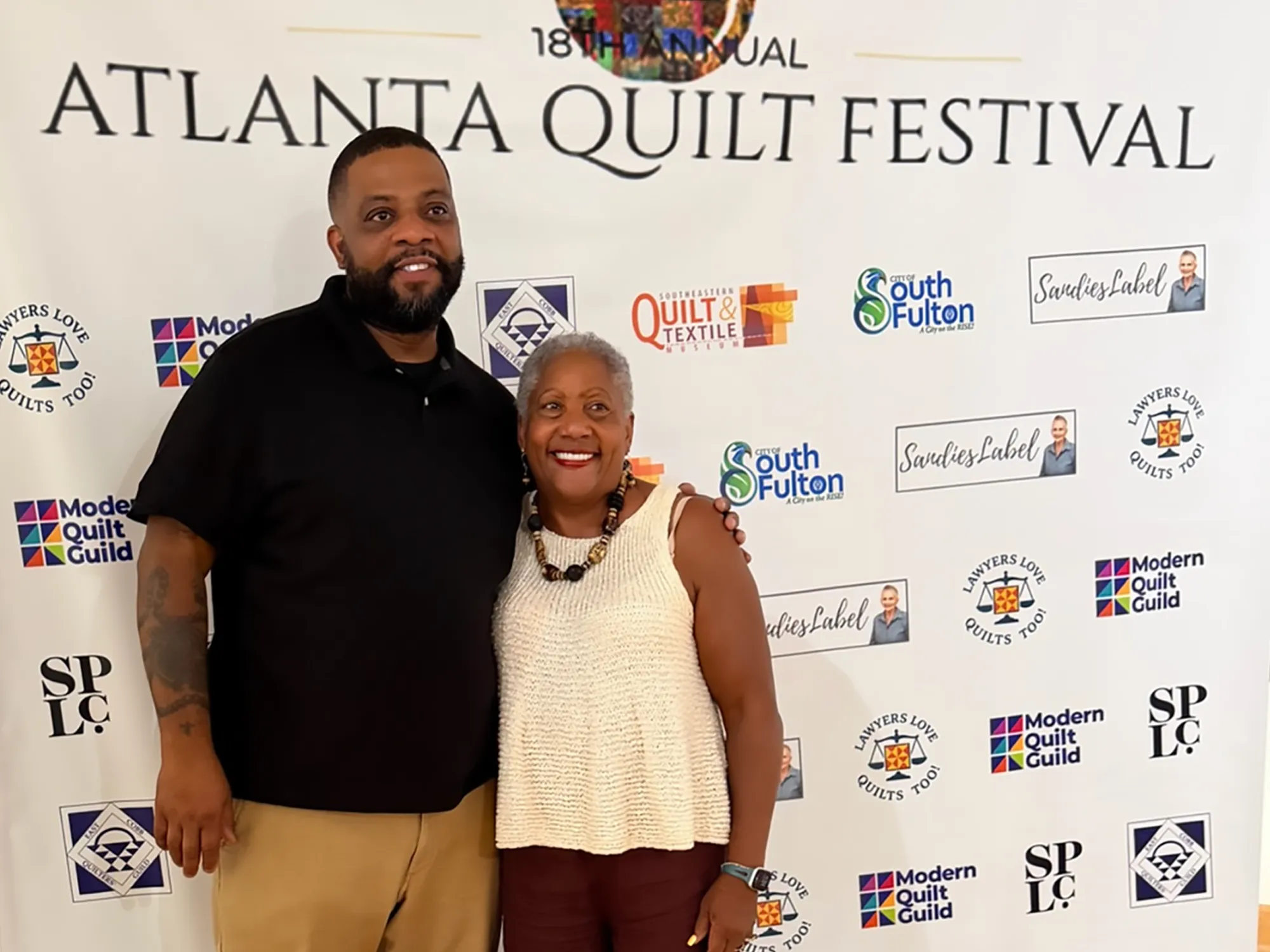
OV Brantley founded the Atlanta Quilt Festival, built the Good Trouble exhibit, and made A Star Among Stars by refusing the instruction to trim it square.
Let's talk about the fabric your members saved
Almost every quilter has a bin of scraps they can't throw away. I'd love to come talk about what those scraps can become, from stabilizing tricky fabric to building a quilt that tells somebody's story, and I bring a trunk show to pass around.