
Paint-Stained Jeans and Donated Scraps: Two Denim Quilts
November 20, 2026 · By Wesley Hall
Short answer
A denim memory quilt is made from a person's own jeans, cut so the details that belonged to them stay visible: pockets, patches, faded knees, and stains. Denim is heavy, so it works well as a rag quilt with frayed seams on the front, or as a flat quilt paired with a sturdy cotton. Use a denim needle, lengthen your stitch, and plan the layout around the pieces that matter most.
The first thing I noticed about the jeans was the paint.
Flecks of it on the knees. A smear across one thigh. A few drips that had soaked into the cotton and faded a little with every wash. Most people would look at that and call it ruined denim. Then again, the fashion industry has spent decades charging people extra for jeans that come pre-wrecked from the factory, so I figured I was looking at something valuable.
The jeans belonged to a client's mom, who had passed away. Her mom was an artist. These were not the clothes she saved for nice occasions. These were the jeans she painted in.
So the paint stayed. I cut the squares so the stains would land where you could see them, sometimes right in the middle of a block, and I didn't wash a single one of them out.
Why old jeans hold a memory so well
Denim keeps a record of the person who wore it. Levi Strauss and Jacob Davis got their patent for riveted work pants in 1873, and for most of the century after that, jeans were what you put on to do something hard. They fade where your body bends. The knees go pale. A back pocket wears a ghost outline of whatever you carried in it every day.
By the time a pair of jeans reaches a quilter, it has been keeping that record for years. My job on a memory quilt is mostly to not sand it off.
Quilters figured this out a long time before I did. The women of Gee's Bend, Alabama, made quilts out of worn work clothes, denim included, and those quilts now hang in museums. Faded knees and all. If a pair of overalls can end up in an art museum, I can leave a few paint drips on a quilt.
Building the rag quilt
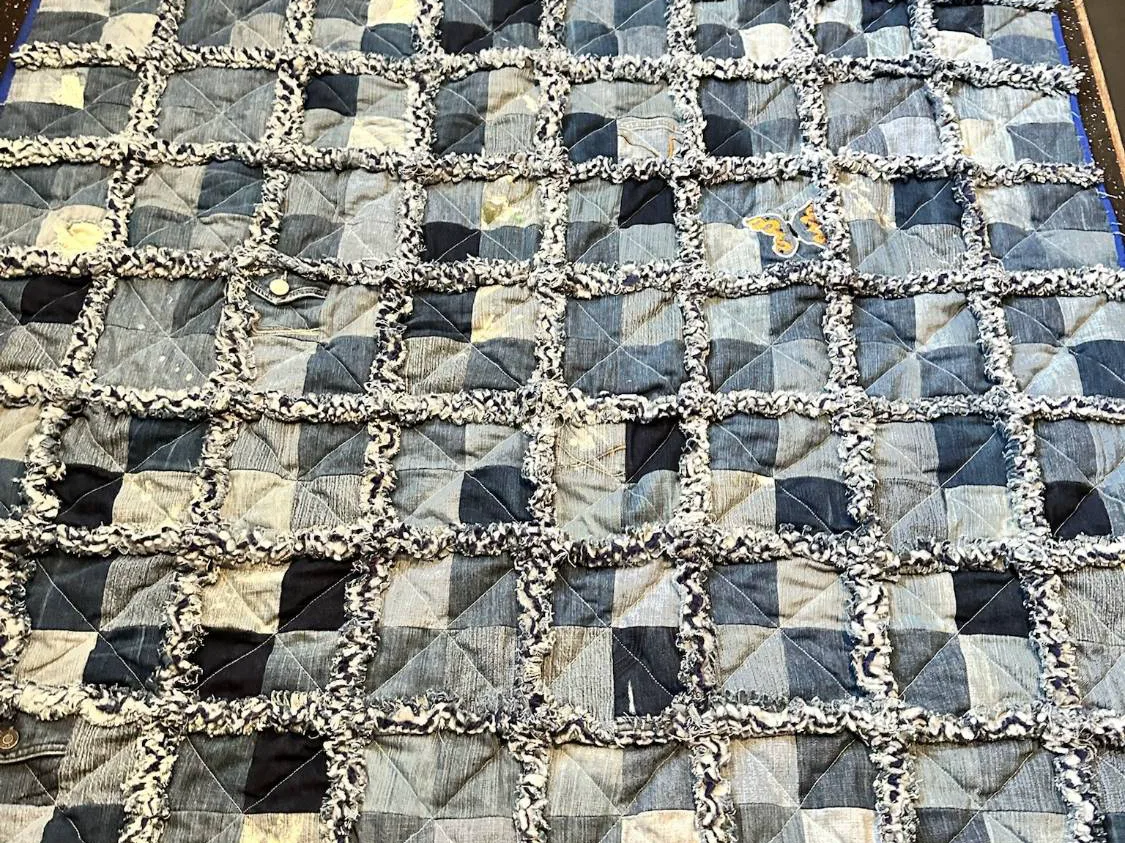
For this one I made a rag quilt, which is about the most forgiving thing you can do with heavy fabric. In a rag quilt, every square is its own small sandwich, quilted on its own. I stitched a simple X through each one, corner to corner. Then the squares get sewn together with the seam allowances facing out, on the front of the quilt, where a quilter would normally be doing everything possible to hide them.
You snip those raw edges every quarter inch or so, wash the whole thing, dry it, and the denim blooms into the soft, shaggy fringe you see running between the blocks. Clean your lint trap after every load. Then clean it again. A denim rag quilt sheds like a golden retriever in June.
I kept some of the pockets whole, buttons, stitching, and all, and worked them into the layout so they read as pockets and not just more blue squares. Light washes went next to dark ones so the grid would have some movement. I finished the outside edge with a blue binding.
Her mom loved to paint butterflies. So on one block, in the middle of all that blue, I embroidered a butterfly.
A trunk show quilt built from strangers' jeans
The second quilt in this post never belonged to anybody in particular, and I think that's what I like about it.
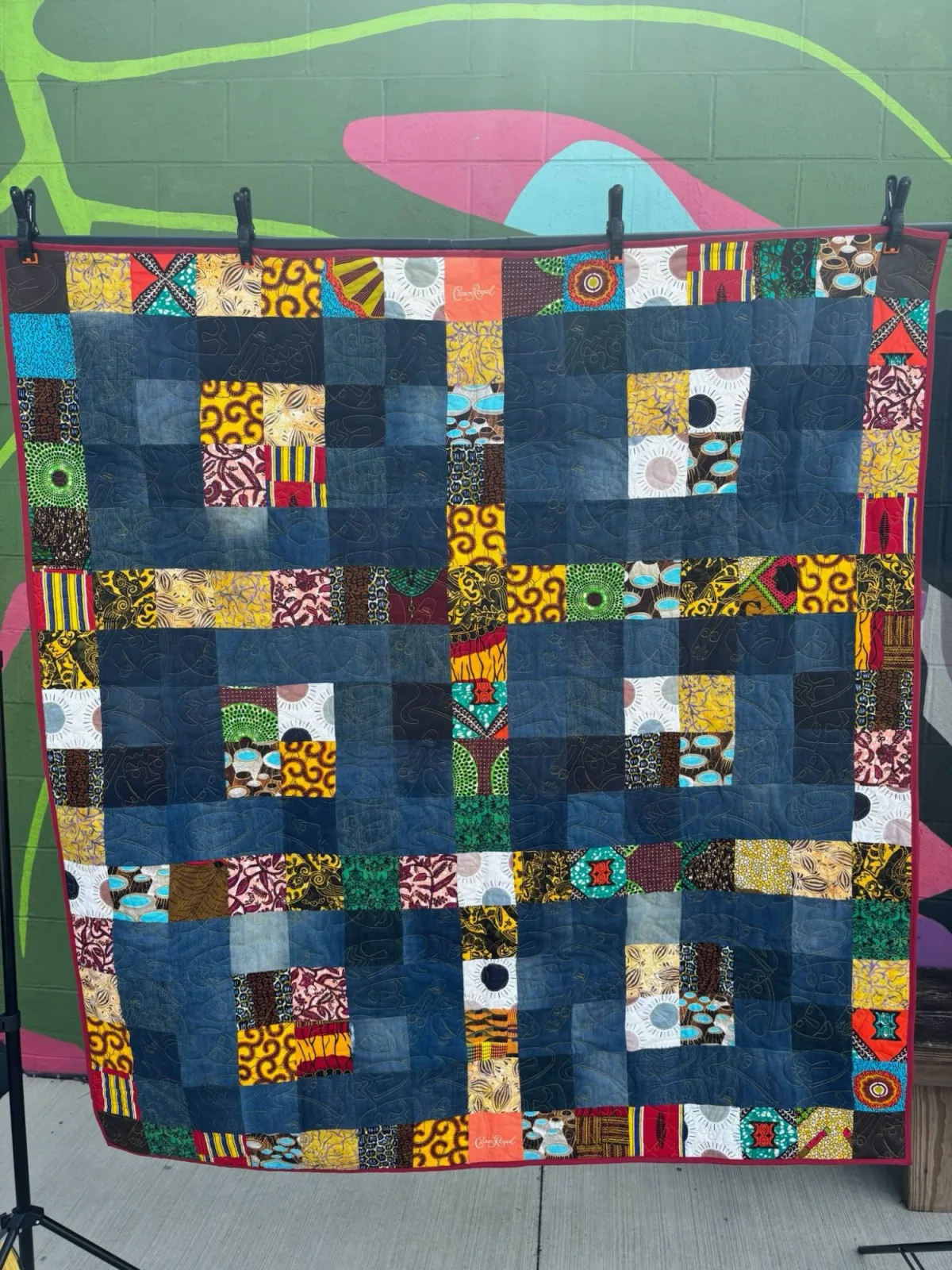
The denim came from Scraplanta, a creative reuse nonprofit here in Atlanta where I sit on the board. People drop off fabric they can't bring themselves to throw away, and somebody else gets to make something out of it. Every square of denim in this quilt was a pair of jeans in somebody's closet. I will never know whose.
I paired the denim with African wax prints, which I have written about before. Wax print cotton is crisp and sturdy, so it holds its own next to denim better than a lot of thinner quilting cottons. The denim makes four big fields of blue, and the prints break through in the middle of each one and run around the edges like a frame. Two orange squares with the Crown Royal name on them sneak in at the top and bottom. I'll let you work out where those came from.
It's quilted edge to edge with a pattern of faces, which felt right for a quilt made from so many people's clothes, and it's finished in red. This is one of the quilts I bring along when I give a talk.
What I tell people who want to try one
Put a denim needle in your machine before you start, a size 16 or 18, and lengthen your stitch. Regular needles will snap on the thick spots where several seams meet, and they will do it at the worst possible moment.
Cut the pieces that matter first. The pocket, the patch, the stain, the faded knee. Plan the layout around those, and fill in with plain denim after. If you start cutting plain squares first, you will run out of jeans before you get to the good parts.
Cut around rivets and heavy hardware, not through them. Mix your washes, light, medium, and dark, because in a quilt that is mostly one color, value does the work that color usually does.
And leave the stains alone. Somebody earned every one of them.
The one thing I added
I think about that butterfly a lot. Everything else on that rag quilt was already in the jeans when they came to me: the fading, the pockets, the paint. The butterfly is the only thing on the whole quilt I made up.
Her mom did the rest, one paint drip at a time.
Bring denim and memory quilts to your guild
I talk with guilds and conferences about memory quilt techniques, rag quilts, and working with recycled fabric, and I bring quilts you can see up close.
More from the Blog
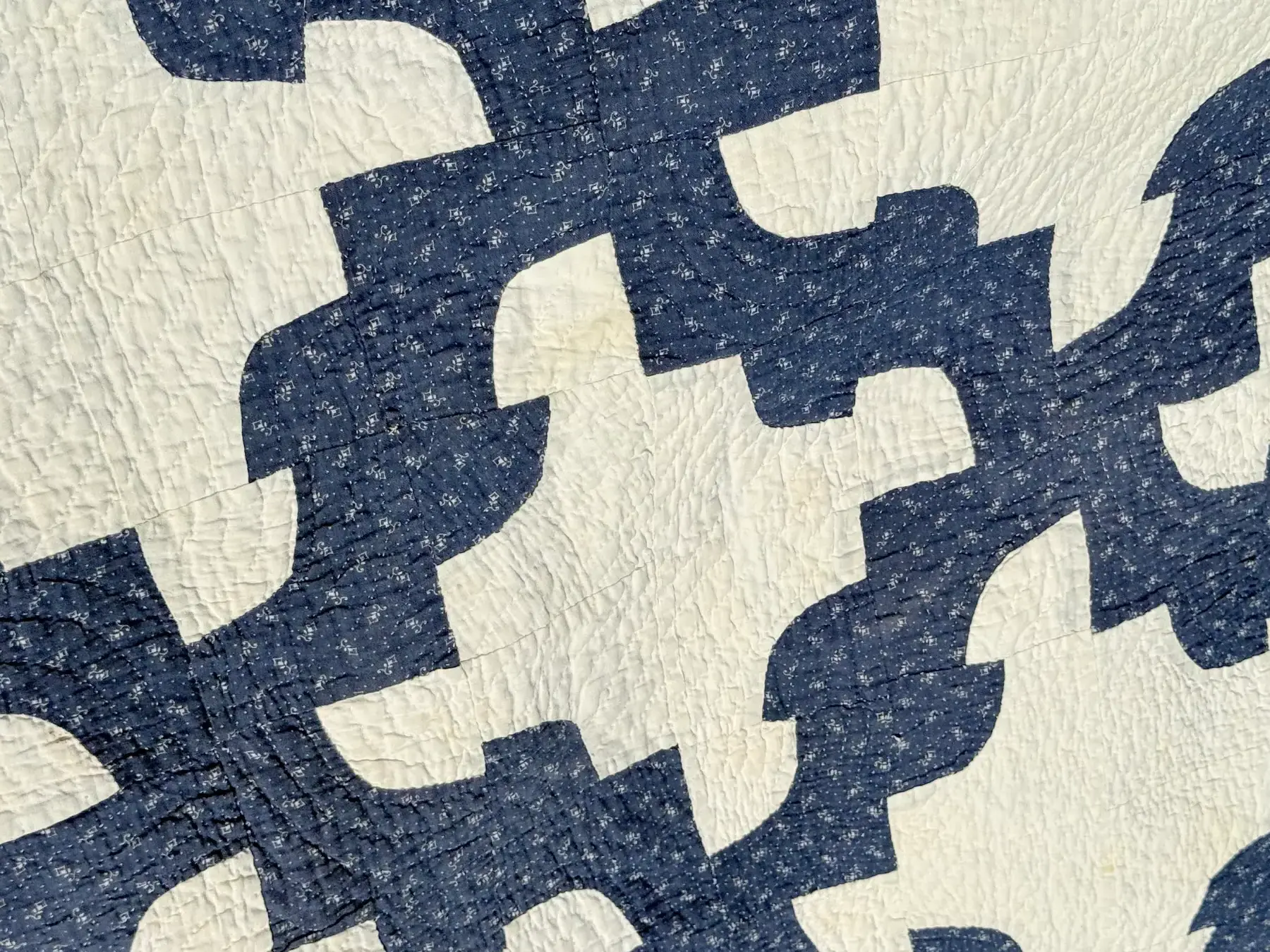
The Drunkard's Path Block and What Temperance Had to Do With It
The Drunkard's Path quilt block answers to a dozen names. Here is what the temperance record supports, what it does not, and why the curves still humble me.
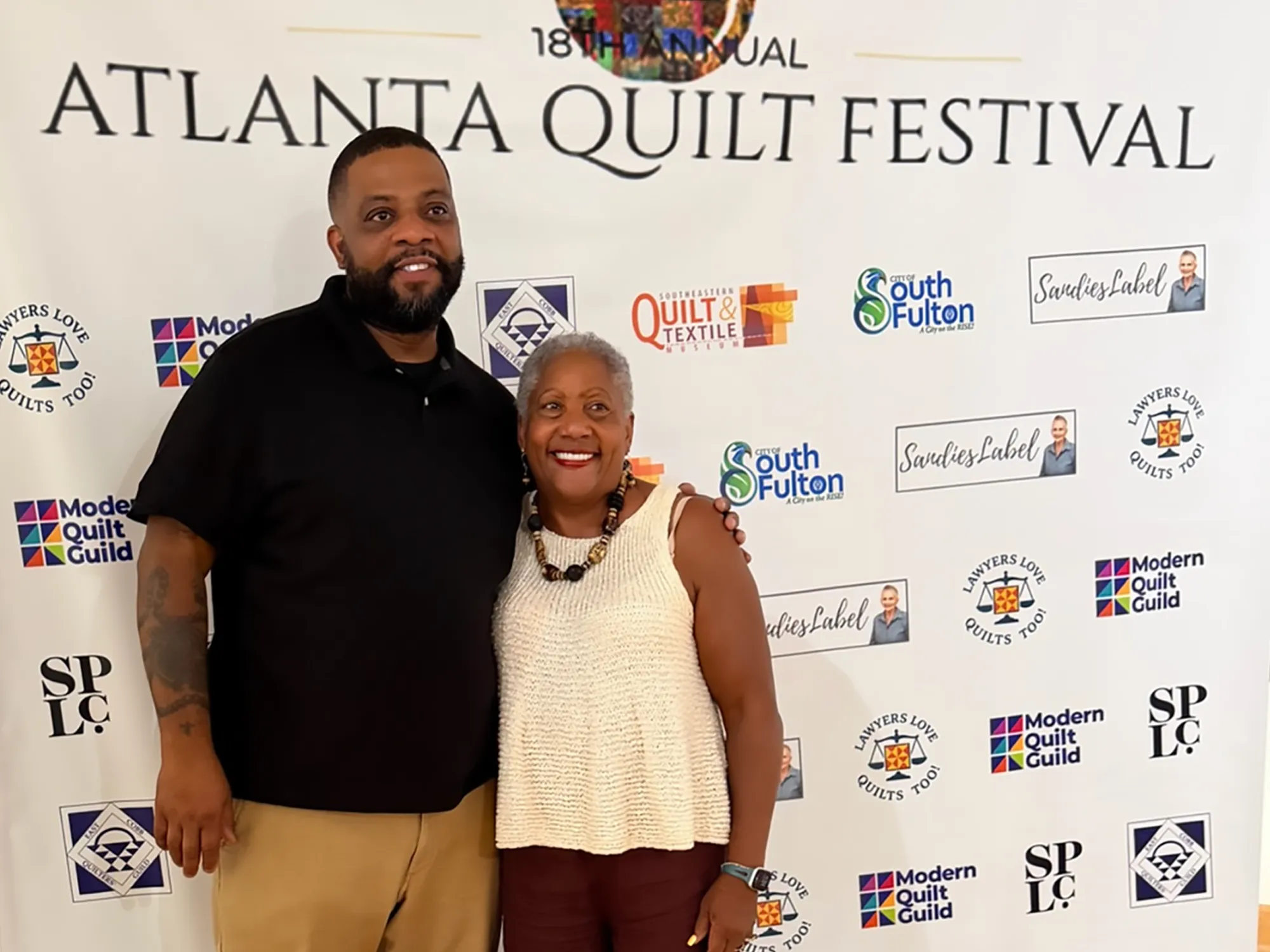
OV Brantley, the Quilter Who Would Not Cut the Rosettes
OV Brantley founded the Atlanta Quilt Festival, built the Good Trouble exhibit, and made A Star Among Stars by refusing the instruction to trim it square.
The Log Cabin Quilt Block: History, Meaning, and Geometry
The documented history of the Log Cabin block, what the Underground Railroad claim really rests on, and the geometry behind every classic setting.
Let's talk denim at your next guild meeting
If your members have a closet full of jeans they can't let go of, I'd love to come talk about what to do with them. I cover memory quilt techniques, rag quilts, and sewing with recycled fabric, and I bring a trunk show so everyone can see the seams up close.