
OV Brantley, the Quilter Who Would Not Cut the Rosettes
October 4, 2026 · By Wesley Hall
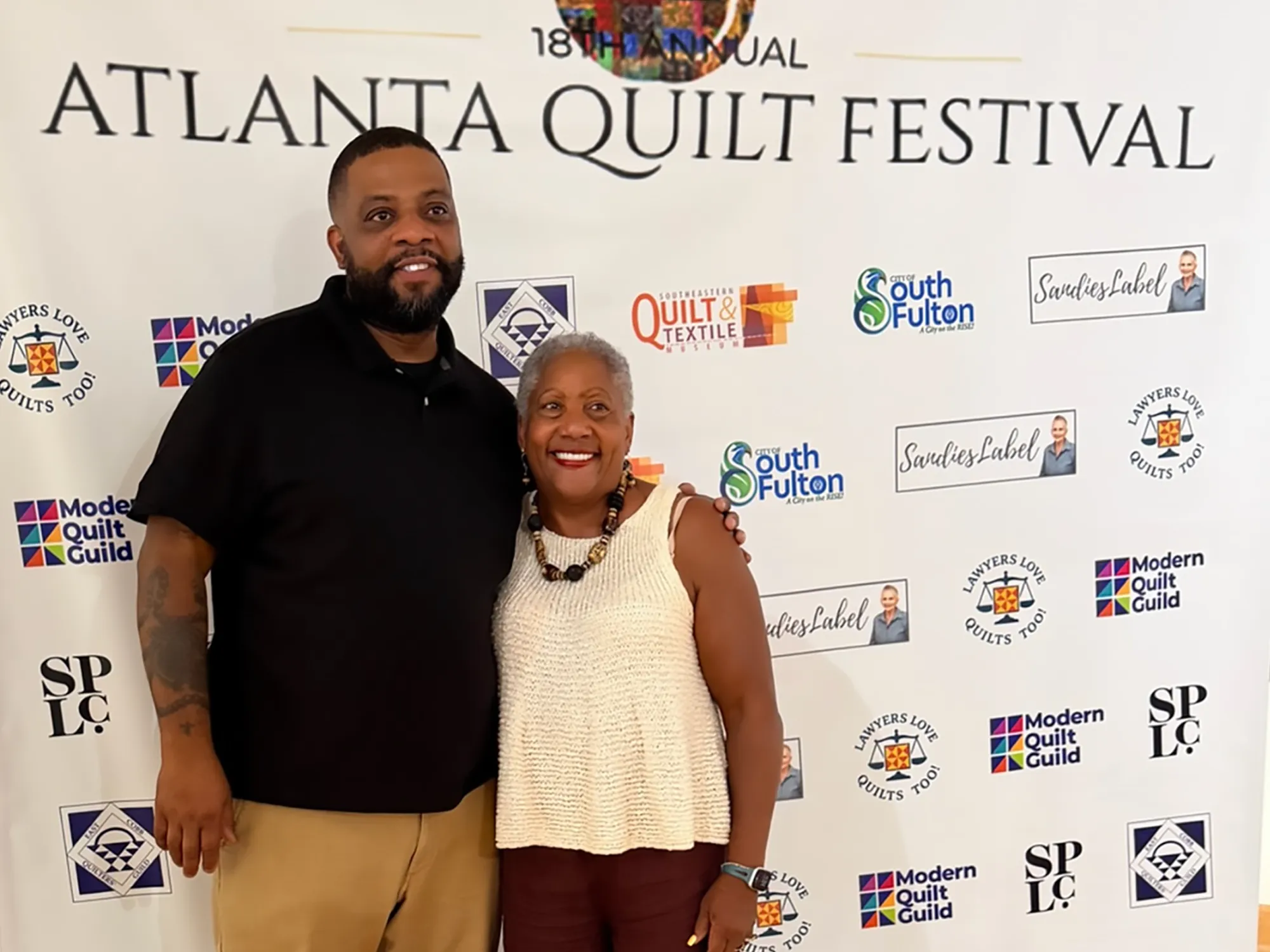
I was about two thirds of the way through my talk at the 2026 Atlanta Quilt Festival when the slide came up. A big medallion of pieced stars, and out at the four edges, rosettes that had no business still being there. I started talking about the maker and the decision she had made, and somewhere in the second row a woman put her hand over her mouth.
That woman was OV Brantley. She made the quilt. She also founded the festival, and she is the one who invited me to speak at it.
She had no idea she was in my slides. Afterward she told me it was one of the rare times in her life she had been speechless, which, if you know OV, is a genuinely remarkable claim. I handed her my copy of Good Trouble and asked her to sign it. She did.
The Rosettes She Refused to Cut
The quilt is called A Star Among Stars. It is built from a pattern that, like a lot of medallion patterns, ends with an instruction most quilters follow without blinking: trim the edges square. In this case that meant slicing through the rosettes at the perimeter. Cut off the curve, get a straight line, bind it, done.
OV would not do it.
Instead she kept the rosettes whole, and then she had to solve the problem that created. A quilt top with scalloped bumps hanging off the edges is not a quilt top. It is a puzzle. Her answer was to appliqué the rosettes onto a starry metallic white ground, so that the shapes she had saved appear to be floating against a night sky that someone turned inside out. What the pattern treated as waste became the thing your eye goes to first.
I have thought about that choice more than I expected to. Patterns are full of quiet instructions to throw things away. Trim this. Square that. It is efficient and it is usually correct and it is also, if you are not paying attention, a habit. OV paid attention.
The Question I Asked the Room
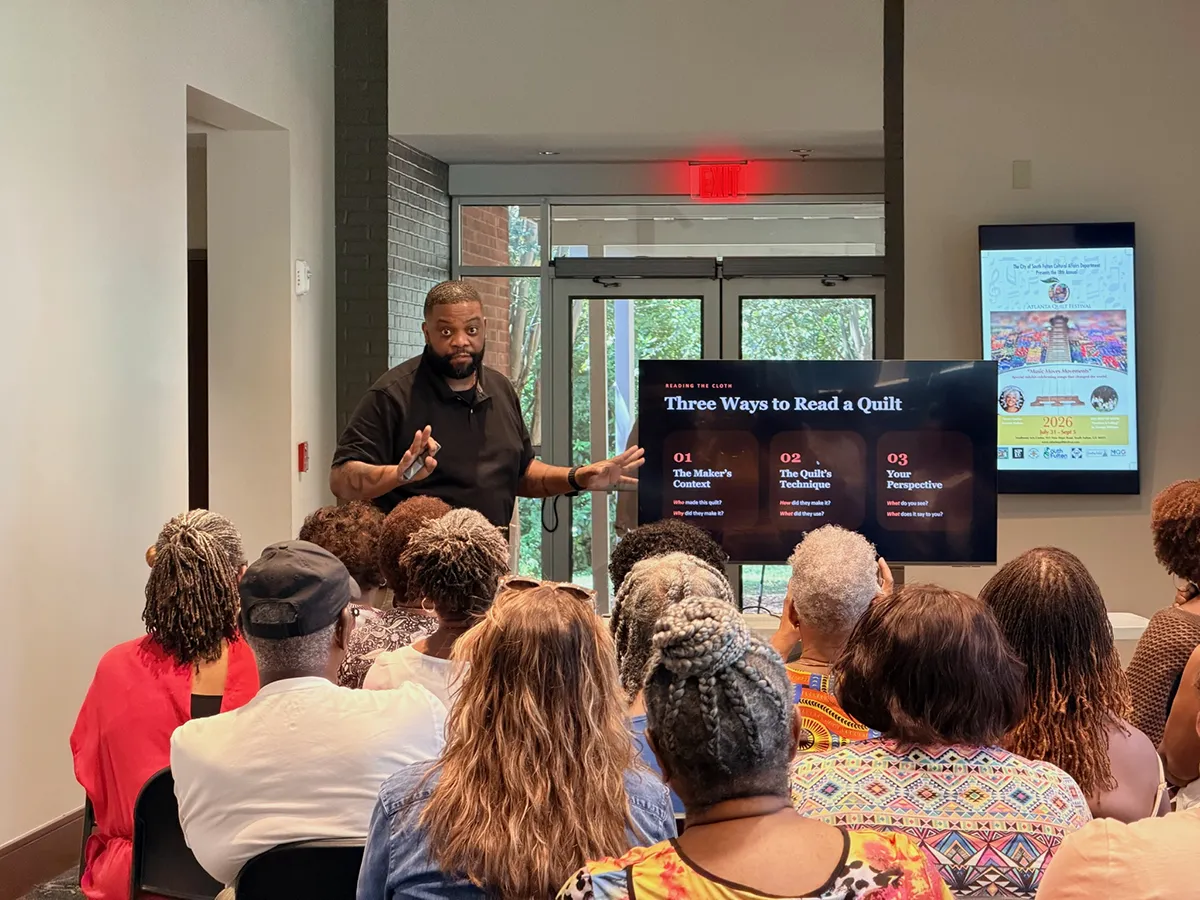
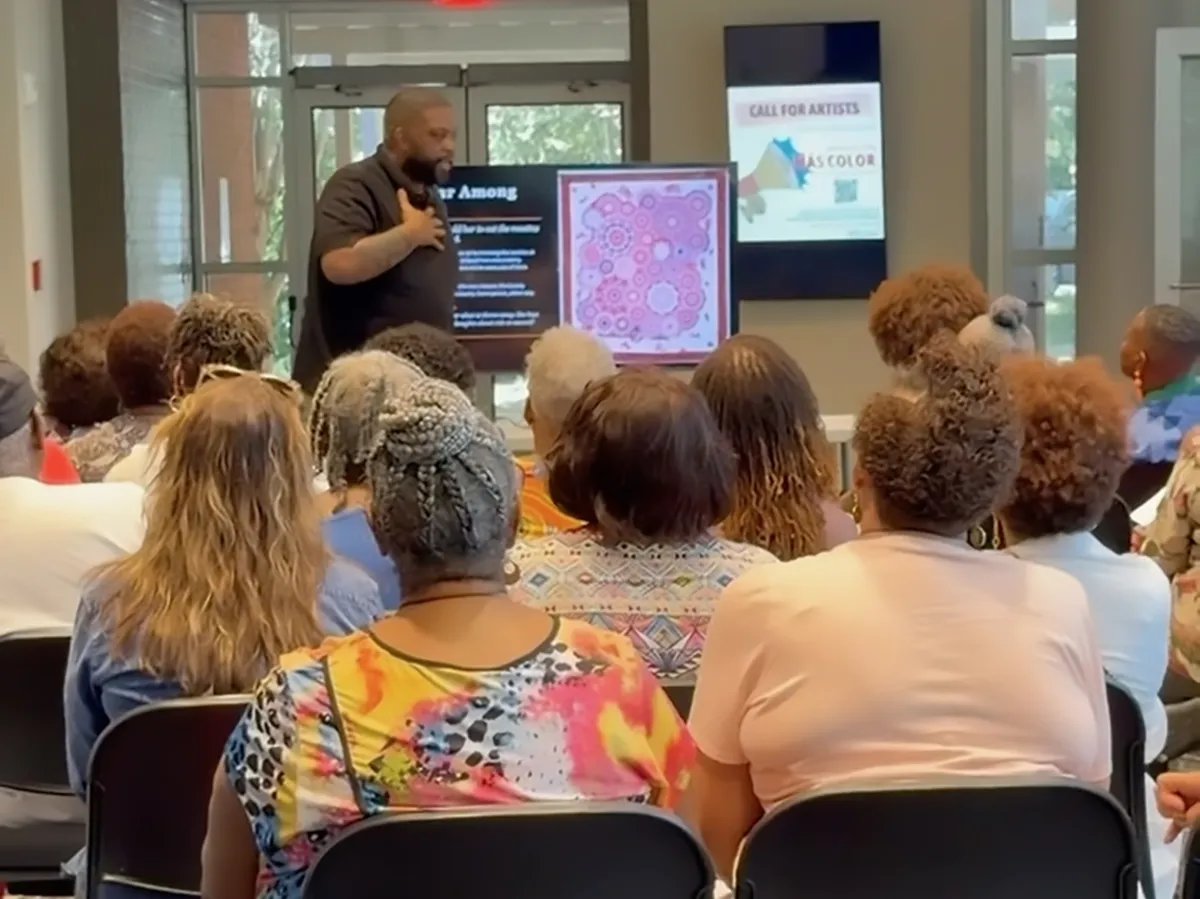
So I put it to the audience. The pattern told her what to throw away. She kept it. What are your thoughts about risk versus reward?
The room went somewhere I did not plan for. People started talking about fabric they had been saving for a decade because no project felt worthy of it. Somebody mentioned a top her mother started that she has never been willing to finish because finishing it would end it. Someone else admitted she trims everything, always, because the straight line is the only part of quilting she can control.
That is the thing about a question with a real quilt attached to it. Nobody answers in the abstract.
And the reward in OV's case is not that the quilt won something. It is that the quilt says something it could not have said squared off. A star among stars, with the outer ones kept and lifted instead of discarded, is a sentence about who gets left out of the frame. She did not need to explain that to anybody. She just refused the scissors.
Meaning First, Always
That refusal is not a one-off. It is how OV works. Her quilts carry subject matter, and she does not soften it for comfort. She returns to Black history, to civil rights, to the people and moments that get flattened into a paragraph in a textbook and then skipped. Portraits. Freedom. The long argument about who this country belongs to. She is interested in what a quilt can hold, not just how it looks on a wall.
The Good Trouble exhibit is the clearest version of that. It takes John Lewis's phrase, the one he spent a lifetime demonstrating rather than merely saying, and gives it to a group of quilters as a prompt. The resulting work travels, and the companion book carries it to people who will never stand in front of the quilts themselves. I own a copy. It is now signed, which makes it the single most valuable book on my shelf and also the one I am most afraid of spilling coffee on.
What strikes me about Good Trouble is that it is not a solo project dressed up as a group show. OV built a container and then handed it to other makers. That is a different instinct than most of us have.
The Work Nobody Puts on a Label
Here is what does not fit on a museum card. OV founded the Atlanta Quilt Festival. She has been a steady presence in Brown Sugar Stitchers, the Atlanta guild that has given so many Black quilters here a place to land, and she keeps showing up for the organizing work that makes a quilt community an actual community instead of a mailing list.
Founding a festival sounds glamorous until you learn what it actually involves. Venues. Insurance. Hanging systems. Volunteers who said yes in March and vanished by August. Somebody has to answer the email from the vendor whose table is three inches too wide. Somebody has to decide whose work goes on the wall facing the door. OV does that, year after year, and then she goes home and makes quilts about John Lewis.
I got invited to that festival because she invited me. I want to be clear about the order of operations there. The person whose quilt I was analyzing from the podium is the same person who gave me the podium. She did not mention the quilt was hers when she asked me to come. She just asked me to come.
What I Took Home
Two things, besides the signed book.
The first is that I have started asking a different question when I look at a finished quilt. Not what did you add, but what did you decline to remove. Almost every quilt has a moment where the maker chose between the clean answer and the true one, and you can usually find it if you look at the edges.
The second is smaller and harder to shake. I have been quilting more than ten years and I have trimmed a lot of things square because the instructions said to. OV has me rereading my own patterns with more suspicion.
She told me she was speechless. I was the one standing at the front of the room, and I did not have anything to say either.
Bring this conversation to your group
I talk about makers like OV Brantley and the decisions hiding in their quilts, with plenty of room for your members to answer back.
More from the Blog

Harriet Powers and the Quilts That Carried History
Born enslaved in Georgia in 1837, Harriet Powers stitched scripture and local history into narrative quilts. What the record actually says about her work.
The Log Cabin Quilt Block: History, Meaning, and Geometry
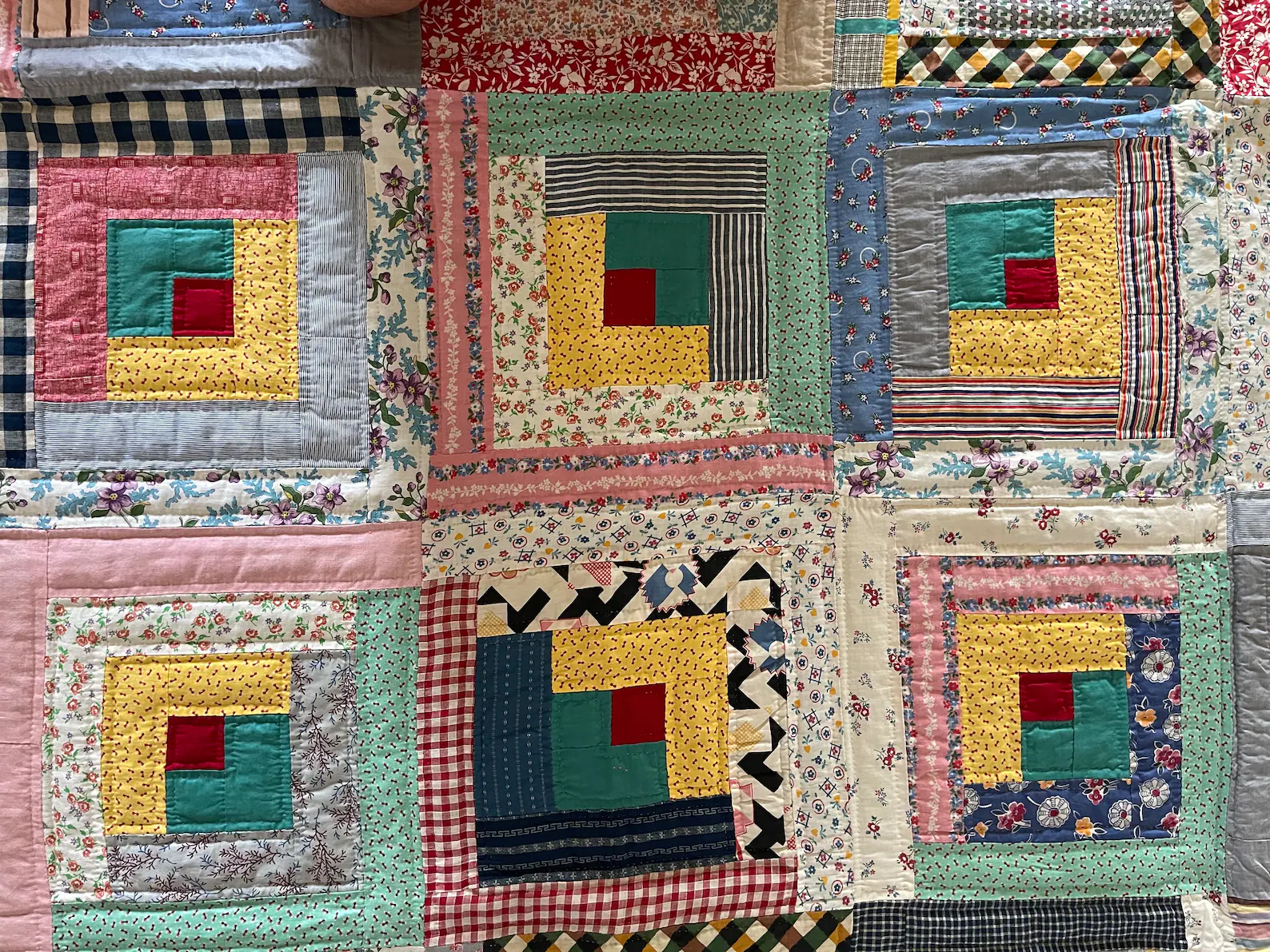
The documented history of the Log Cabin block, what the Underground Railroad claim really rests on, and the geometry behind every classic setting.
The Meaning Behind Popular Quilt Blocks
From the Flying Geese to the Log Cabin, every quilt block has a history. These patterns carry stories passed down through generations of American quilters.
Looking for a speaker for your guild?
The best part of the Atlanta Quilt Festival was not my slides, it was what the room said back. I love a group that argues with me a little. If your guild, class, or conference wants a talk on quilt history, the makers working right now, or memory quilt techniques, I would be glad to hear about it.