
The Drunkard's Path Block and What Temperance Had to Do With It
November 19, 2026 · By Wesley Hall
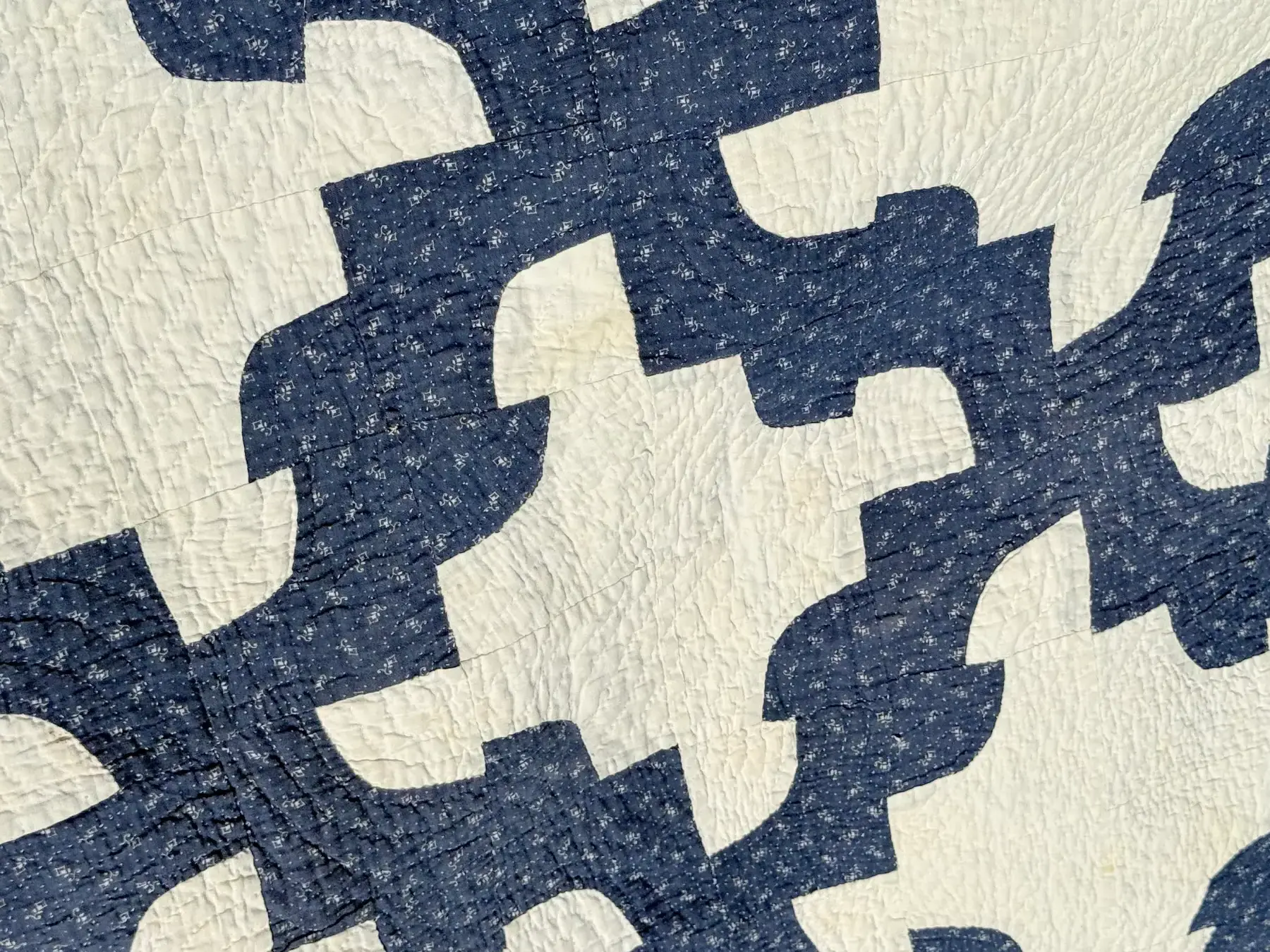
I came to the Drunkard's Path the way a lot of people do, which is sideways, through a book about something else. I had a copy of Hidden in Plain View open on the kitchen table, and I was not reading it for the history. I already knew where the quilt code claims stood with historians. What I wanted to understand was the packaging. How a shape becomes a story, and how a story becomes something you can put on a book jacket, a museum label, or a lecture flyer.
Drunkard's Path shows up in that framework as the block that supposedly told a freedom seeker to travel in a zigzag rather than a straight line, so as not to be tracked. I have written at more length elsewhere on this blog about why the antebellum documentary record does not support that system of signals. I will leave it there for today.
Because the more interesting thing happened after I closed the book. I went looking into the block itself, expecting a tidy origin, and found that this particular arrangement of curves has been claimed by just about everybody.
The block is a square with a bite taken out of it
Mechanically, Drunkard's Path could not be simpler to describe. You take a square, cut a quarter circle out of one corner, and sew in a quarter circle of a contrasting fabric. That is the unit. One square, one curved seam, two fabrics.
Everything else is orientation. Rotate those units, group them in fours or sixteens, and the same single piece produces wandering ribbons, interlocking circles, pinwheels, and that staggering, lurching line that gave the block its best known name. The pattern does not live in the piecing. It lives in how you turn the blocks before you sew them down.
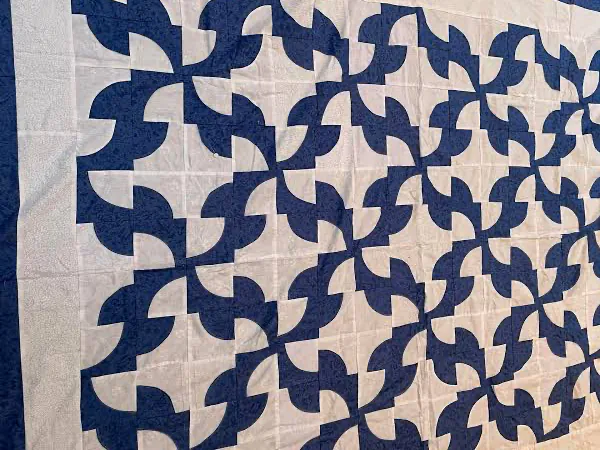
That flexibility is exactly why the thing is so hard to pin to one origin. A unit that simple gets invented, reinvented, and borrowed constantly, in a lot of places, by people who never met.
One block, a dozen names
If you go to Barbara Brackman's Encyclopedia of Pieced Quilt Patterns, which is the standard reference for tracking when a block name first turns up in print, you do not find one name for this curved unit. You find a crowd. Rocky Road to Dublin. Fool's Puzzle. Wonder of the World. Solomon's Puzzle. And Drunkard's Path.
That list tells you something useful before you read a word of commentary. The curved two patch is older and more widely traveled than any single name attached to it, and most of the names we use today cluster in the published record of the later nineteenth century and the pattern columns that followed. Printed names come from publishers, periodicals, and catalogs. They are evidence of what a pattern was being called in print at a certain moment. They are not evidence of what the woman who pieced your great grandmother's quilt called it in her own kitchen, which may have been nothing at all.
This is the part that took me longest to absorb. I used to assume a block name was a kind of birth certificate. It is closer to a nickname that stuck after the fact, and a block this adaptable collected several.
The temperance connection that holds up
Now to the part that is actually documented, because there is a real story here and it deserves to not get flattened.
The Woman's Christian Temperance Union was founded in 1874, and it became one of the largest organized movements of American women in the nineteenth century. Its symbol was a white ribbon. Its chapters raised money the way churches and civic groups raised money then, which often meant quilts. Signature quilts, where you paid a small sum to have your name embroidered or inked into a block, were a reliable fundraising engine. The quilt went on display, the names went on the cloth, and the money went to the cause.
Quilt historians have long flagged the association between temperance fundraising quilts and a blue and white palette, and Brackman is among those who have written about it. Blue and white Drunkard's Path quilts turn up often enough in that context that the pairing is worth taking seriously. Women in the movement did use quilts, they did use this block, and the joke in the name was not lost on anybody.
What the record does not do is settle the origin. Whether the name was coined as moral commentary on drink, or whether temperance women simply picked up a name already in circulation because it suited their argument perfectly, is a separate question, and the evidence does not close it. Both can be true of a movement that was very good at repurposing what was already lying around.
How a name becomes a sales pitch
Here is the thread that pulled me in originally. A quilt with a story attached is worth more than a quilt. That is true at an estate sale, it is true on a museum label, and it is extremely true on the lecture circuit.
Temperance women understood this. A banner that says a staggering line is the path of a drunkard does a lot of rhetorical work in a church basement, and it does it without anybody having to give a speech. That is good communication, and it was in service of a cause they were open about.
The code story works on the same mechanism a century later, which is probably why it spread so fast. It gives a shape a secret. And a secret, unlike a documented fundraiser quilt, cannot be checked, which is a feature if you are selling it and a problem if you are trying to understand what people actually made and why.
Subtract the code and you are not left with nothing. You are left with an enormously popular block that quilters all over the country turned a dozen different ways, and a national movement of women who used cloth to raise money and make an argument. That is a better story than the one I came in through, and it has the advantage of being supported.
Then I tried to sew one
I have pieced these. The curves are humbling.
You clip, you pin, you ease one bias edge into another, and you go slowly, and the first few still come out with a pleat baked in somewhere. I have a modern machine, good needles, rotary cutters, and templates I can print at home. Every one of those is a cheat code compared to what the women making blue and white fundraiser quilts had.
They set those seams by hand, or on a treadle, with templates cut from newspaper or cardboard, in whatever light they had after everything else was done. When I talk about this block now, that is where I end up. Not with the code, and not even really with the temperance argument, but with the sheer nerve it takes to look at a quarter circle and decide you will sew two hundred of them.
The block keeps turning either way. It does not tell you who made it.
One block, a dozen names, and a movement
I talk with guilds, universities, and conferences about blocks like this one, and about how quilt stories get told and sold.
More from the Blog
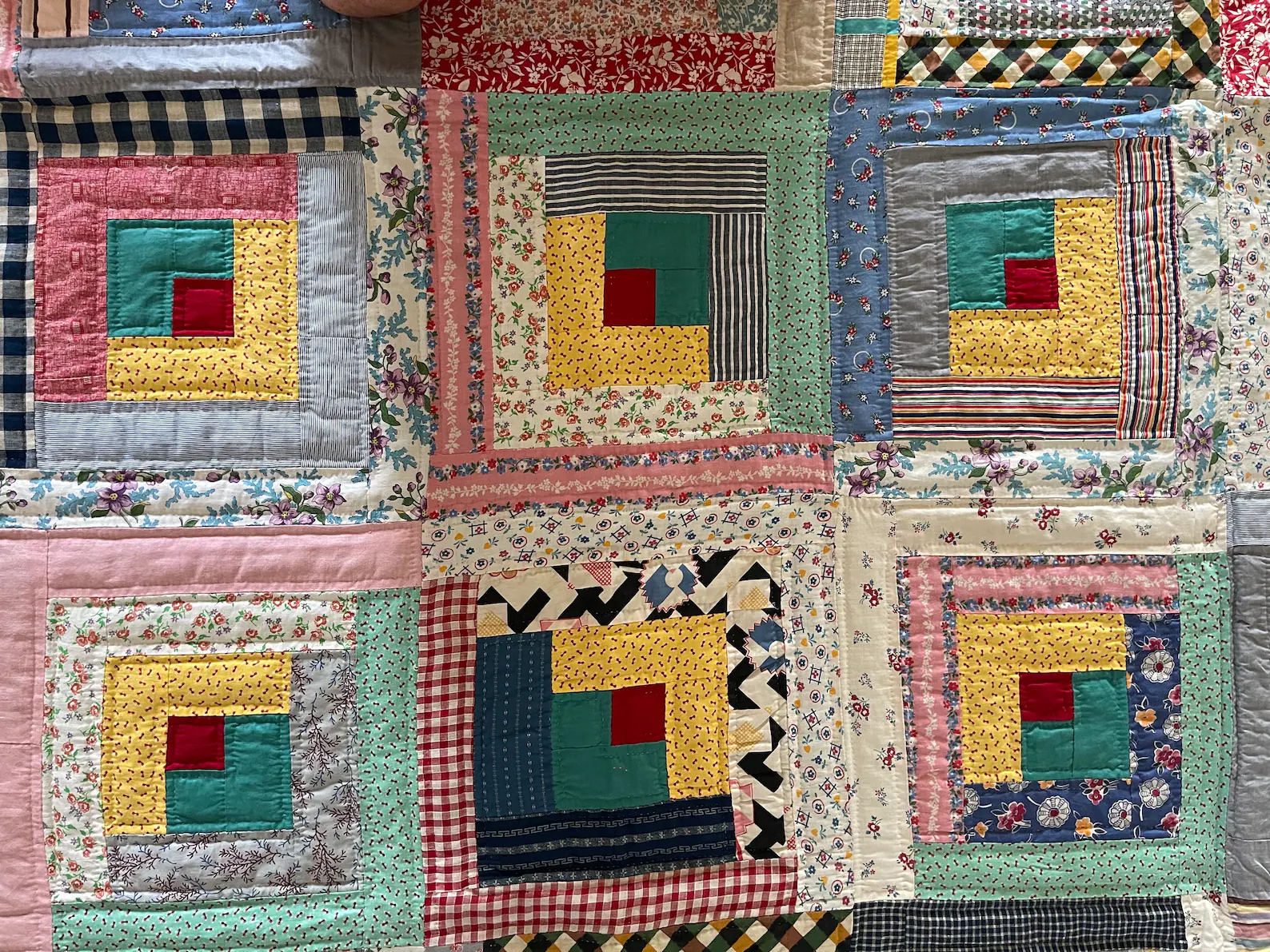
The Log Cabin Quilt Block: History, Meaning, and Geometry
The documented history of the Log Cabin block, what the Underground Railroad claim really rests on, and the geometry behind every classic setting.
OV Brantley, the Quilter Who Would Not Cut the Rosettes
OV Brantley founded the Atlanta Quilt Festival, built the Good Trouble exhibit, and made A Star Among Stars by refusing the instruction to trim it square.

Harriet Powers and the Quilts That Carried History
Born enslaved in Georgia in 1837, Harriet Powers stitched scripture and local history into narrative quilts. What the record actually says about her work.
Bring the Drunkard's Path to Your Group
This block has carried a temperance argument, a legend, and about a dozen different names, and it is a great way into how quilt stories get made. I give talks on quilt history and memory quilt techniques for guilds, universities, and conferences.